


Contemporary Ceramics gallery and shop exhibits the greatest collectable names in British ceramics along with the most up and coming artists of today. Our distinguished makers are all carefully selected members of the Craft Potters Association.
All of our makers are members of the Craft Potters Association and each of them have a story to tell.

Marina was born in Toulon in the South of France and spent part of her childhood in the rich coastal plains of Gabon, before moving to Alsace near the Vosges mountains and then to England. Her immersion in different landscapes and cultures fostered a sense of curiosity towards the transience of existence, which continues to inform her creative practice. She studied sculpture at Falmouth School of Art and later did a two-year
City and Guilds in ceramics in Nottingham.

Tricia comes from Aberdeenshire, Scotland, and studied ceramics at Grays School of Art, Aberdeen in the 1980’s. After a three-year spell working as a decorator/designer in a production pottery in the Highlands, she moved to Edinburgh to become a ceramic artist specialising in wheel-thrown porcelain.

Anna Lambert, a nationally recognised full time maker, makes hand-built earthenware ceramics using various techniques including slab-building, modelling and painted slips. Using a variety of techniques, each of her pieces are entirely unique.

Clare Conrad's work is an exploration of colour and texture, inspired by the effects of light and ageing on architecture, artefacts and landscape. Her technique of layering vitreous slip onto wheel-thrown vessels, vases and bowls creates a rugged texture.

Lisa Hammond MBE is a soda firing potter who works at Maze Hill Pottery, Greenwich, London. She has been making pots for best part of 40 years in which time she has taught extensively and pioneered soda glaze and shino firings.
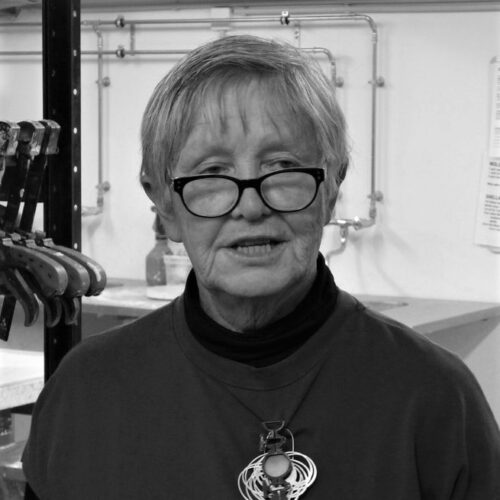
Priscilla was born in Cape Town, South Africa and attended the School of Art in Durban before setting up her own ceramic studio in England in 1968. She spent a decade in England before moving to Denmark where she has lived and worked since.
Priscilla makes porcelain pinch pots with graphic surface etchings revealed in underglaze. Her monochrome pots are often wood-fired.