


Contemporary Ceramics gallery and shop exhibits the greatest collectable names in British ceramics along with the most up and coming artists of today. Our distinguished makers are all carefully selected members of the Craft Potters Association.
All of our makers are members of the Craft Potters Association and each of them have a story to tell.

With both of her parents being artists, Kerry’s childhood was surrounded by paintings, sculpture, and architecture. They had a potter friend and spent quiet hours in her studio. She went on to gain a BA Hons Ceramics at University of Westminster.
Kerry is inspired by the making process itself, using clay as a way of exploring her relationship to the world as a maker. She seeks creative strategies analogous to those found in nature such as growth, metamorphosis, and fragmentation.
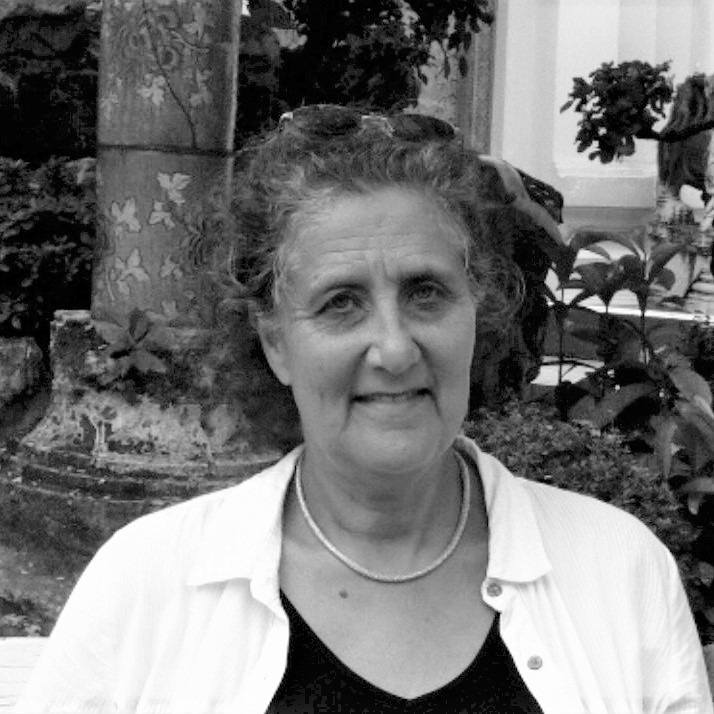
“I aim to blur the dividing lines between art and craft. I use clay or porcelain as my canvas, creating illustrated plates for installations or vessels as sculptural displays. The themes include zoom meetings, refugees, masks, musicians, people at rest, funny faces, at the café, at the beach, at the Met, and conversations across time.” – Gail Altschuler.

With a training in art, design, and ceramics culminating in an MA in ceramics, Sarah creates ceramic sculptures. Taking the idea of clay as a metaphor for the body, and the body as vessel, her work explores these concepts through an abstracted study of the physiology and corporeality of the body.

Jitka was born in Prague. She studied medicine and worked as an anatomist. In 1985, she moved to Britain and studied ceramics at Croydon College of Art and Design and Stone Masonry at City of Bath College. She set up her studio in London with the help of a Crafts Council grant. She lives and works in Bristol.

Gaby’s current focus is making saggar-fired, wheel-thrown pots. What originally drew her to this type of making was the interplay between the highly controlled form, and smooth, polished, surface texture of the piece on the one hand; and the ‘seemingly’ random nature of the surface marks created by smoke and metallic, chemical reactions, on the other.
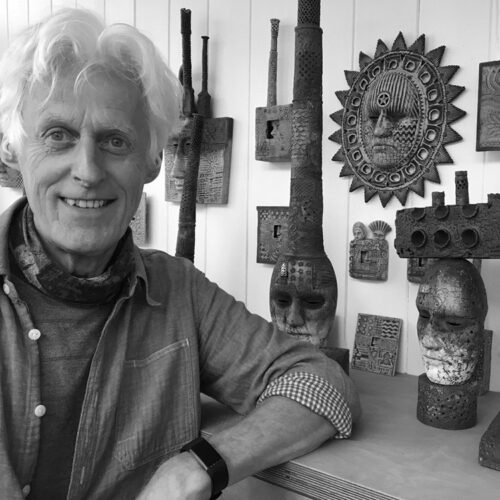
Alasdair Neil's ideas focus on the strange beauty found in the decaying architecture of industrial wastelands. He has built up a large collection of clay and plaster moulds that he has made from the surfaces of found fragments of discarded waste. It is these textures, patterns, shapes and colours that form the thread that runs throughout his entire range of unique hand built forms