

Contemporary Ceramics gallery and shop exhibits the greatest collectable names in British ceramics along with the most up and coming artists of today. Our distinguished makers are all carefully selected members of the Craft Potters Association.
All of our makers are members of the Craft Potters Association and each of them have a story to tell.

John Jelfs' work has been widely exhibited in leading galleries including the Victoria & Albert Museum, Alpha House in Sherborne, Beaux Arts, Bath, Rufford Ceramics Centre in Nottingham and is also included in many collections in the UK and abroad.
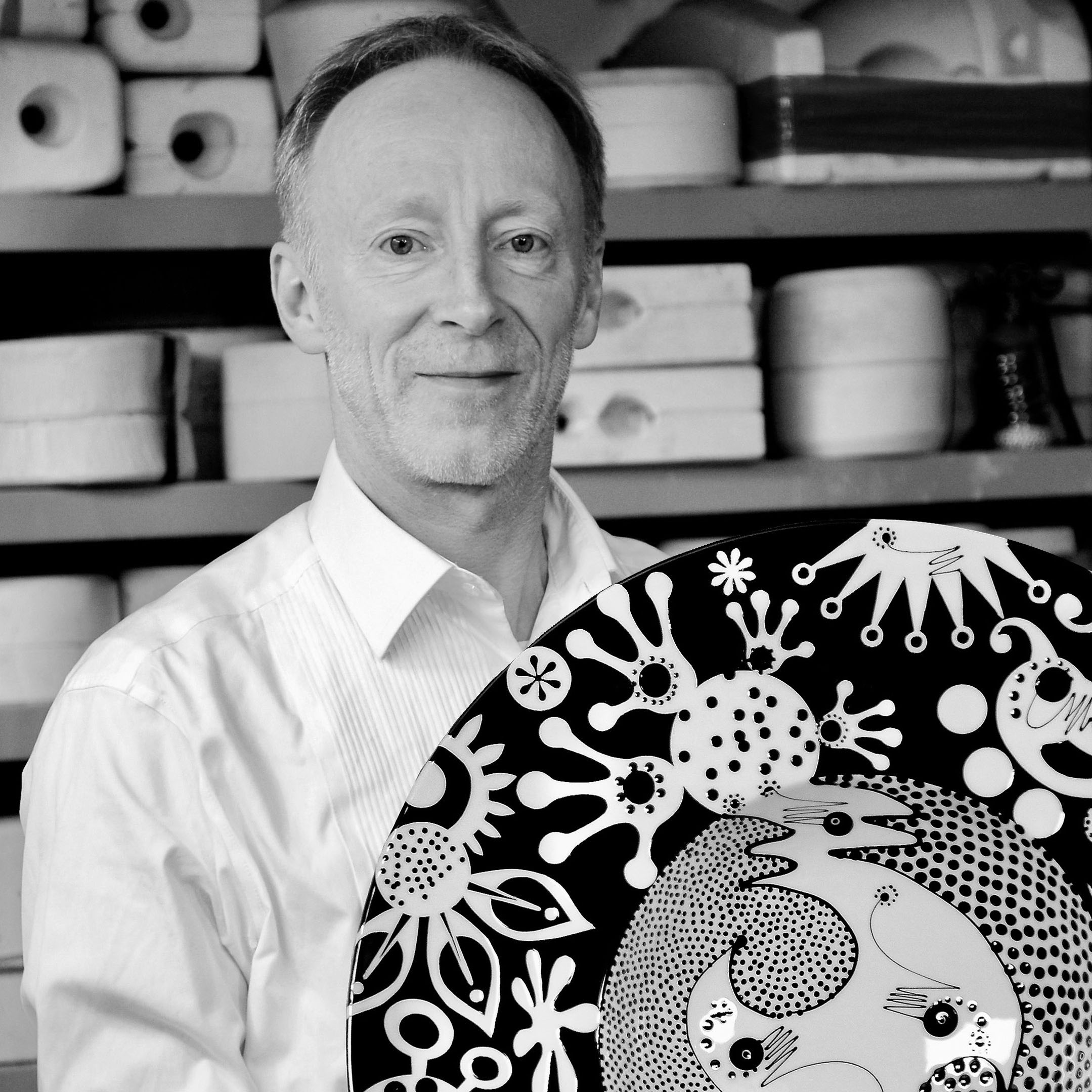
Mark makes black and white domestic slipware using a combination of traditional craft and modern industrial ceramic techniques, in a contemporary take on Staffordshire slipware. Currently, he is developing his tableware and large functional work into sculptural one-off pieces.
These include slab built, stacked designs for sculptures which depend on gravity to interlock. He is also experimenting with platinum lustre transfers to exploit the differing reflective qualities of glazed and lustred surfaces.

Birgit Pohl grew up in Germany and porcelain objects in her family home always held a particular fascination. After moving to London, a chance visit to a potter’s studio first opened her eyes to the possibilities of working with porcelain. She learned how to throw on the wheel initially at evening classes and went on to study at Clay College, Stoke-on-Trent.

Craig was born in Glasgow, Scotland. He graduated with a Higher National Diploma in Ceramics at Harrow College, then gained a BA(Hons) Fine Art specialising in Ceramics at Portsmouth Polytechnic. He has taught extensively and became a professional member of the Craft Potters Association in 2005.

Inspired by a Chinese bottle gifted to her as a child, each piece Carolyn makes assumes its own identity with the application of transferred decoration. Collected imagery and text tell stories from lives past and present centring around the human condition and covering themes both significant and trivial.

Hiro was born in Fukushima, Japan. Due to her father’s work commitments, Hiro had a peripatetic childhood. The constants in her life were her grandmother and being close to nature. However, she was dismayed later on to find that the traditional old buildings from her childhood walks with her grandmother had been demolished. Driven by sadness and nostalgia at the loss of her childhood environment/world in Japan, Hiro creates a link between the present and the past from her memories and imagination.