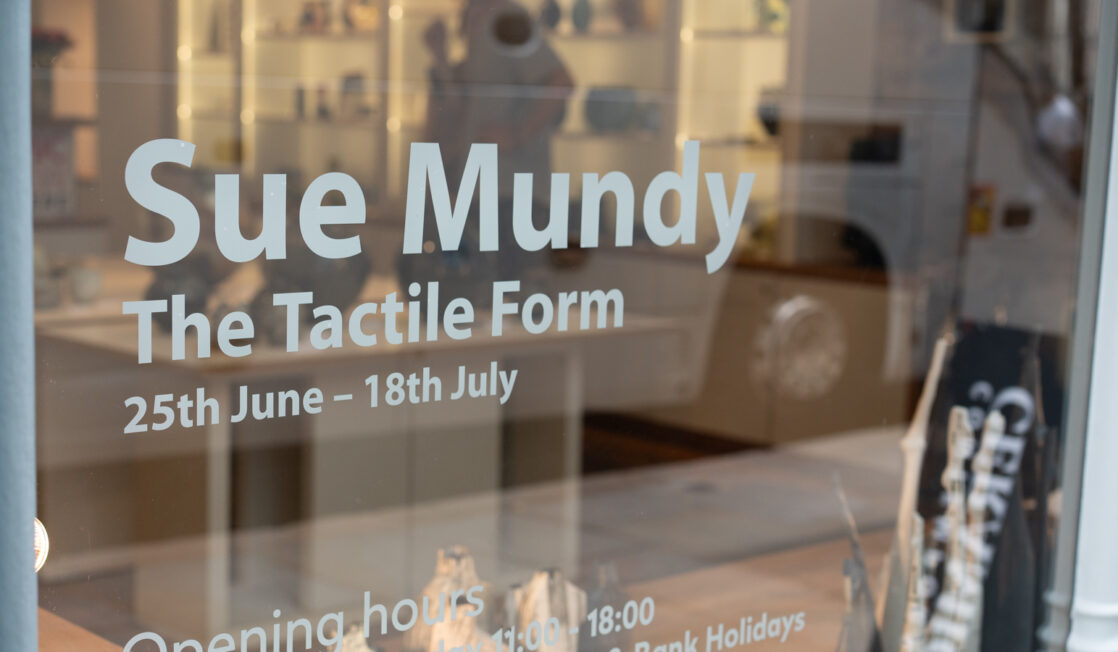
In this conversation, Sue Mundy discusses her practice in the context of her solo exhibition, The Tactile Form, at Contemporary Ceramics. She reflects on her working methods, sources of inspiration, and the ideas that underpin her work. The exhibition runs from the 25th June – 18th July 2026
Is there a typical working day?
Contemporary Ceramics: Describe your studio on a typical working day – what does it look, feel, even smell like to be in that space?
Sue Mundy: I have worked from various mixed studios previously, including a 2 year residency at The University of Reading. It is now wonderful to have my studio at home in my garden. I enjoy working alone (with Radio 4 obviously). There is a freedom of being on your own with your thoughts and ideas.
I find the hardest part of studio life, especially if I have been away, is starting. If there is nothing already on the go I will start with pinch pots, they feel grounding and all immersive. I tend to work most days, getting started by 10 am after the dog walk. The only problem with having the studio at home is it makes staying late far too easy.
Contemporary Ceramics: Was there a moment – early on or later in life – when clay stopped being a material and started feeling like a language?
Sue Mundy: I believe ever since I started working with clay, at school, I felt a sense of calmness, ideas could flourish and I could be myself. I remember one particular show where a visitor handed me a piece of paper where she had written down all the emotions she saw in the work.
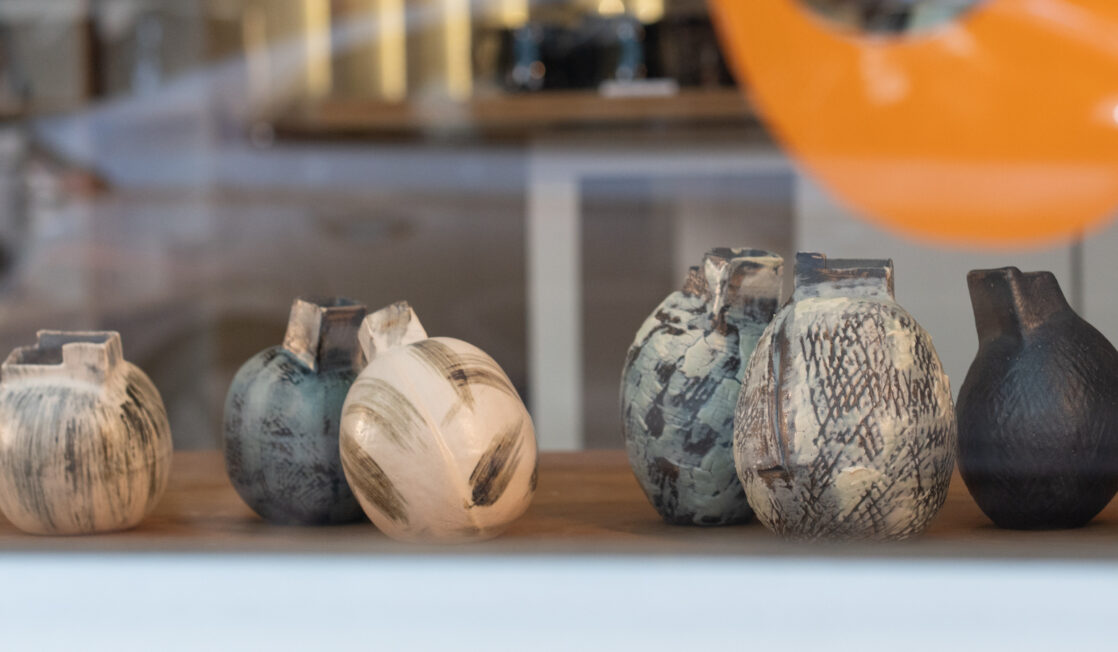
It was everything I had experienced in the previous few months. It was then I realised my work could speak much louder and more eloquently than I ever could with words.
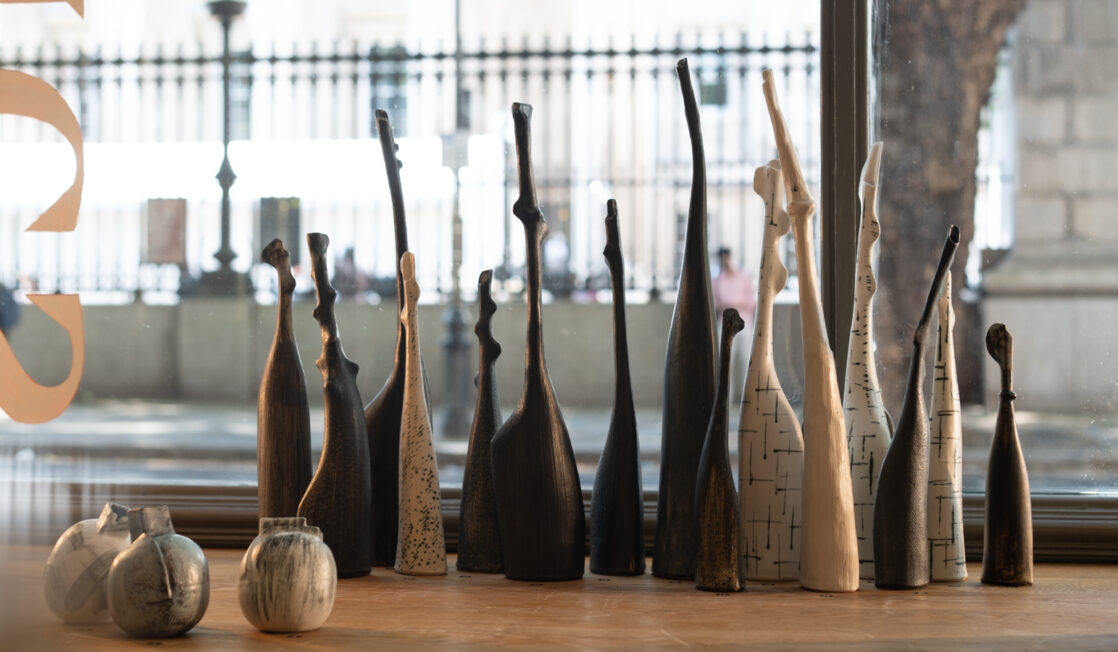
Contemporary Ceramics: What was the first piece of art that truly stopped you in your tracks? Do you think it still lives somewhere in your work?
Sue Mundy: Barbara Hepworth – Group I (Concourse).
I remember seeing this piece when Tate St. Ives / Barbara Hepworth first opened. I was mesmerised by “Forms Standing” their stillness and serenity but also the noise of conversation between each piece.
Contemporary Ceramics: You work exclusively by hand, using slow, repetitive building techniques. How does that pace shape the way a piece develops – do you find the work changes direction as it grows?
Sue Mundy: Hand-building allows for the development of each piece. I don’t use templates so each work starts its own journey with every coil carefully placed to allow the form to evolve.

I will sometimes look at a form and feel a change of flow/direction is needed so that is when I’ll cut a chunk off, rejoin and see how that action changes the rhythm.
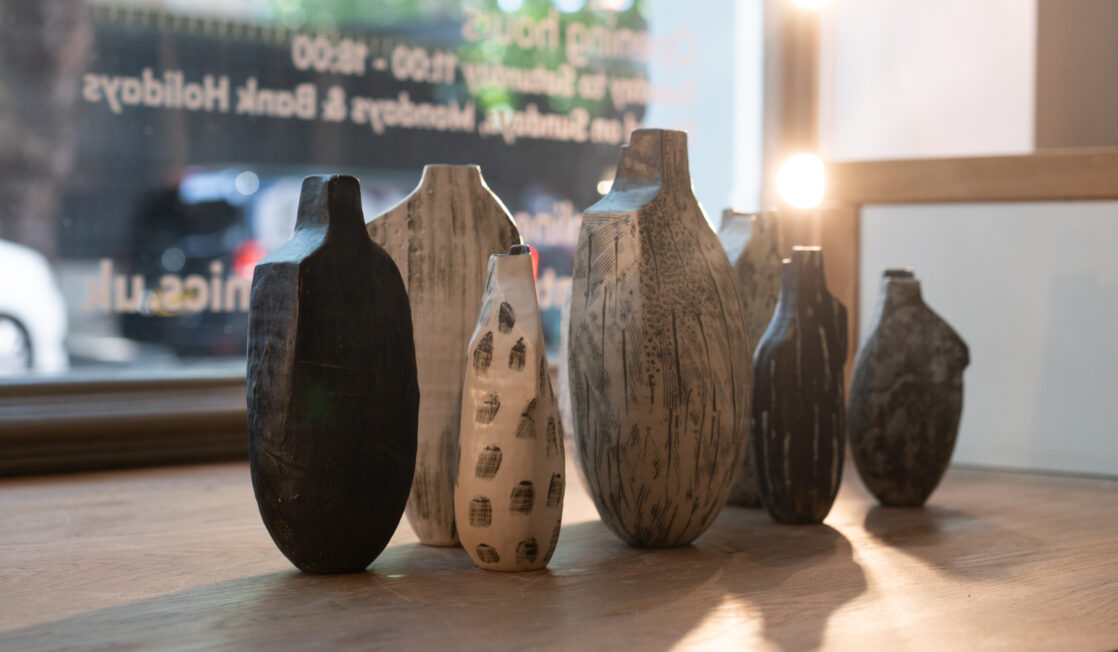
Contemporary Ceramics: You’ve described clay as giving you a secondary voice – a line of communication through form. What does clay allow you to say that words don’t?
Sue Mundy: Mainly clay allows me to express my emotions and to be open. When making and texturing I allow myself a free space where no-one is judging me.
Contemporary Ceramics: Your work is described as exploring both fragility and hidden strength in the natural world – two qualities that seem to pull in opposite directions. How do you hold both of those things in a single piece?
Sue Mundy: The slow hand-building process allows for many changes in direction within the shape. Through adding details and refining the rims I can rearrange where the strength and fragility lie. I enjoy trying to bring these two opposing qualities together in to one form.


Contemporary Ceramics: When you began working towards The Tactile Form, did you have a clear sense of what you wanted the exhibition to be – or did the work lead you there?
Sue Mundy: I knew it would be chance to make some larger works and that is where I started. I wanted one huge conversation between them all. With the amazing curation of my work in the space I feel there is so much interaction happening between the pieces – which I love.
Contemporary Ceramics: Looking at the work in this exhibition, what has surprised you most about where the work has taken you?
Sue Mundy: Working on such a large body of work has been fantastic. Over the past 6 months there has been a fabulous flow of creative ideas all combined to be shown together. Sometimes working on 6 at a time. Knowing I was working towards the exhibition at Contemporary Ceramics was both exciting and daunting. I am thrilled to have had this opportunity and thoroughly enjoyed seeing the work come together and displayed so beautifully.
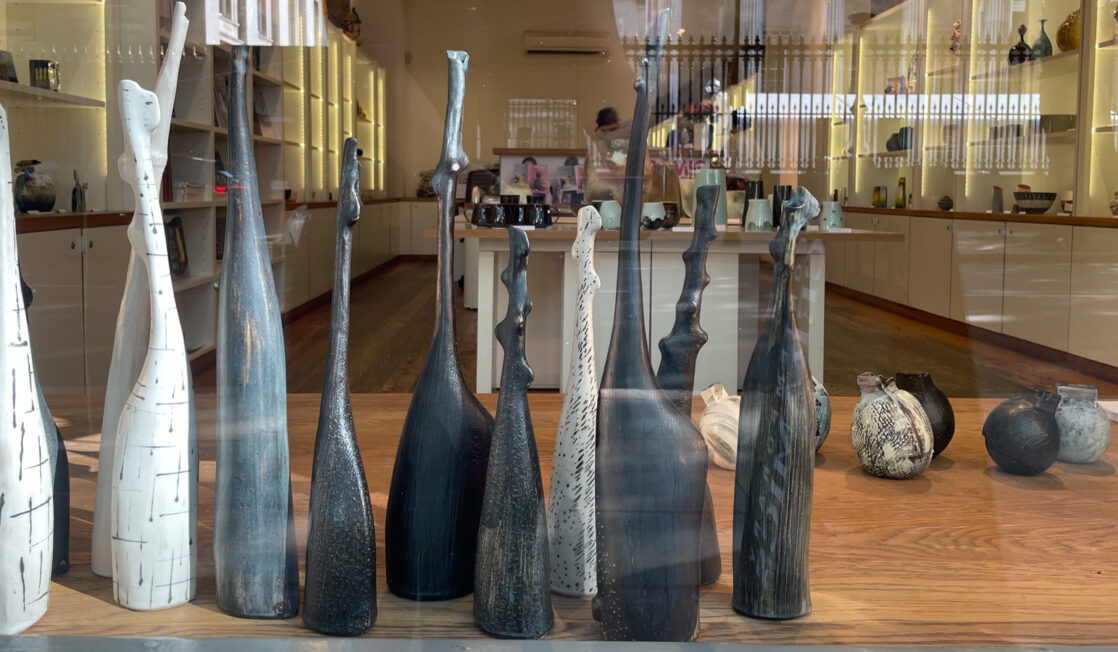

Contemporary Ceramics: And finally, what do you hope someone feels standing in front of one of your pieces – not thinks, but feels?
Sue Mundy: I hope the viewer will have an emotional response and feel the need to touch, caress, hold the work, possibly take care of it. Most of all enjoy the work and if you take a piece home, keep turning it around as every side will reveal something different.