Contemporary Ceramics is excited to present New Members of the Craft Potters Association. As part of this group exhibition, we delve into the artists’ creative process and learn more about how they work. The exhibition runs from the 5th – 28th February 2026.
Tom Knowles Jackson

The Exhibition
Contemporary Ceramics: How has your work grown or changed for this exhibition? What kind of journey do you hope to take your audience on?
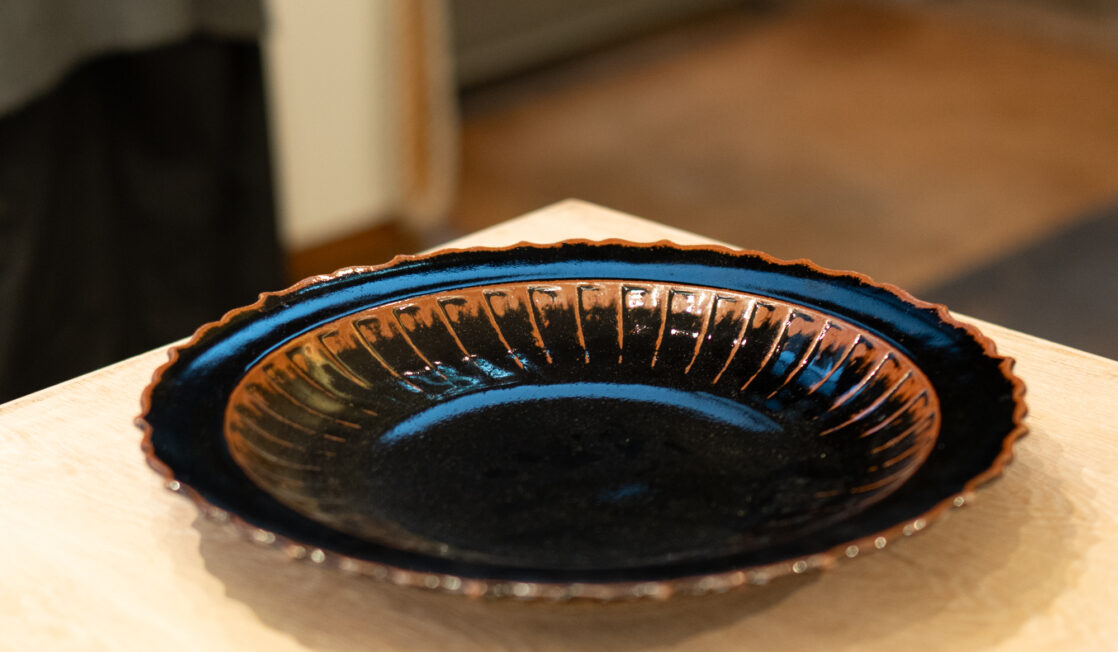
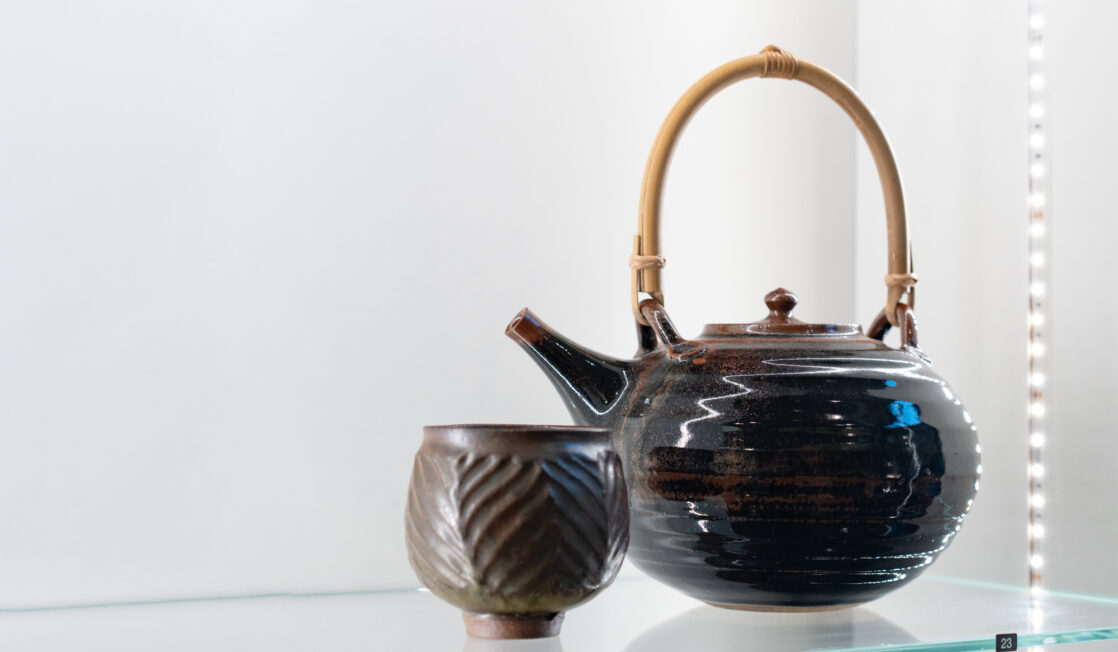
Tom Knowles Jackson: I have selected work for this exhibition that offers a glimpse of the range of work I produce. I have somewhere around 28 pots in my range so have selected a number of individual pieces and small collections to show off the range of shapes, glazes and fired effects I look for in my work.
On Inspiration and Ritual
Contemporary Ceramics: You mention that your work is inspired by the ceremony of eating and drinking. How do you approach designing a piece so that it both enhances these daily rituals and maintains practical functionality?
Tom Knowles Jackson: I have lived and worked in ‘previous lives’ in the Middle and Far East and Africa, all environments rich in visual references for my work. These cultures are also linked by their reverence for communal eating and drinking. My work is drawn from these experiences and so often emerges subconsciously. All too often the ideas for new forms evolve from my existing range, though sometimes they occur to me whilst I’m in that mesmerising zone of repetition throwing; that euphoric zone of mechanical concentration, like meditation, as I throw the same shape over and over and over again. This is the birth place of the most fruitful ideas.
On Form, Function, and Aesthetics
Contemporary Ceramics: You describe the balance between form and function as an ongoing ‘battle.’ Can you give an example of a piece where this tension is particularly evident, and how you resolved it?
Tom Knowles Jackson: My aim is always to make work that is pleasing to look at, to hold and to handle. This reflects good form. For a household pot to be useful though, it must be able to perform its function effectively. Often form and function will complement each other; a teapot must be light to hold when empty (implies good form) so that it is light enough to lift and pour when full (good function). Sometimes the opposite is true, perhaps the application of a handle could distract from the line of a pot and so the dichotomy between form and function arises. I find this to be an inexorable challenge but one I relish; real beauty in functional household pots is to create harmonious pots that recognise and embrace both elements. I always try to plan these by design but when a cooking pot cracks in use or a mug breaks too readily in the washing bowl, these are indications that form over function has dominated. Both scenarios (and others) have happened to me and informed by ongoing designs.
On Materials and Firing Techniques
Contemporary Ceramics: Your glazes are largely derived from foraged, natural materials and fired in kilns you’ve built yourself. How does the unpredictability of natural materials and wood firing influence the final look of your pottery?
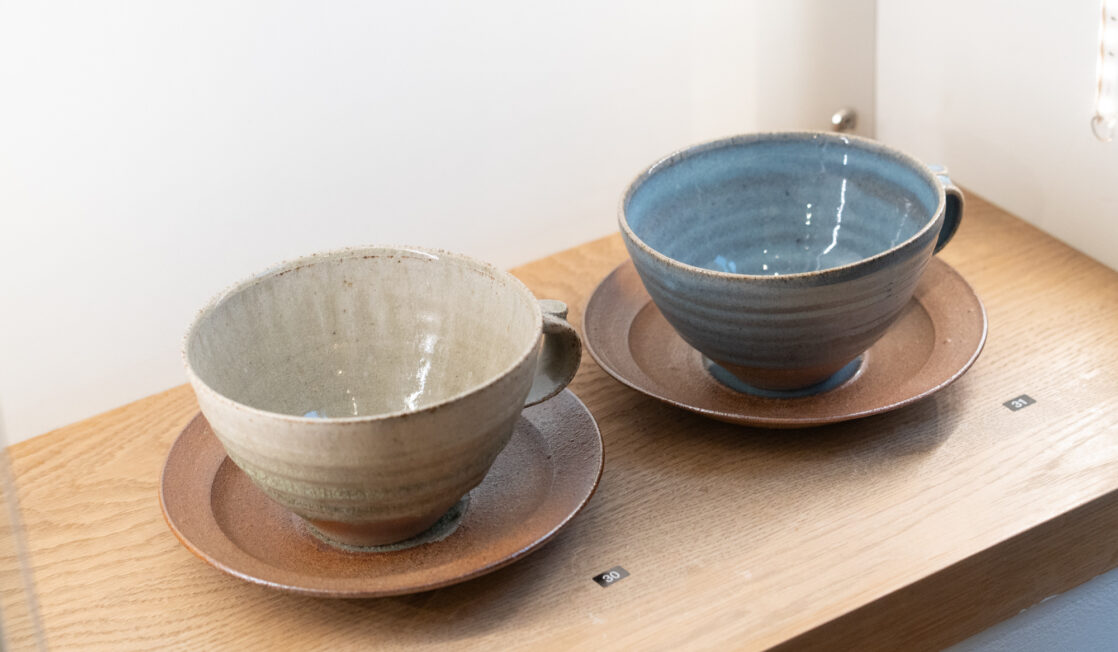
Tom Knowles Jackson: My use of glazes, often only to line my pots and the celebration of naked clay on display in many of my pieces, is a reflection my love of clay and the beauty and potential of wood firing. Clay is such a gorgeous material. It should, where function allows, be celebrated. Naked clay surfaces also offer the best canvases for marks, flashes, shadow and toasting created in a wood kiln. Each pot can tell a story of the firing and where the path of the flame or the shelter offered by a neighbouring pot can be clearly seen. The right clay, form, kiln pack and firing can truly elevate a simple pot.

On Growth and Development
Contemporary Ceramics: How has your practice changed over time? What has been a seminal and/or inspirational moment?
Tom Knowles Jackson: There have been several big changes that have led to developments in my practise. Significant amongst these is a change in firing; the move from electric firing to gas and then from gas to wood. The migration to wood firing was accompanied by the development of my own clay body, one that suited the heavy reduction and flashing available in my kilns. But by far the biggest change, was the move from an electric wheel to a momentum wheel. The wheel is everything. It is my constant work companion and given the time we spend together, an extension of myself. The effect on my work was as transformative as it was instant. The wheel was a chance to slow down whilst at the same time develop efficiency. Through necessity the clay became softer, the wheel slower but with a reassuring perpetual energy. The pots grew off the wheel with more character; a flamboyant energy and a life that still thrills me today. A slower more considered and gestural finish with prominent throwing marks and deliberate details ready to exploit the vagaries of the firing process. I am planning a studio move in the near future and I have little doubt this will punctuate another big change…