


Contemporary Ceramics gallery and shop exhibits the greatest collectable names in British ceramics along with the most up and coming artists of today. Our distinguished makers are all carefully selected members of the Craft Potters Association.
All of our makers are members of the Craft Potters Association and each of them have a story to tell.

Barbara Gittings’ smoke fired, nerikomi porcelain vessels are quiet, contemplative and sensual, as she wants anyone looking at the work to want to touch it and be drawn in.

Bridget started making pots full-time while living in Scotland in 1976. At first, she made domestic stoneware, firing in a gas kiln and gained skills in all aspects of pottery. Having had no formal training Bridget’s determination and hard work meant she gradually developed her own technique.
She has always loved porcelain and gradually changed over to this material finding that it suited the style of work she was searching for. Eastern ceramics were very influential and she loved the Chinese and Korean shapes and glazes.

Karen throws carefully considered porcelain pots for everyday use. Her forms are elegant yet robust: these are pots to be held, filled, drunk out of and eaten from. The purposeful use of one material (porcelain), a single creamy white glaze, a deliberately restricted vocabulary of form and the process of repetition throwing combine to create both unity and diversity in her work.

David read philosophy and literature at Warwick University. Realising the lack of jobs as a philosopher, he became a potter and taught part-time in the ceramics department at Wolverhampton University for thirty years. This allowed him the space in which to continue with his personal practice. He was awarded a PhD from Manchester Metropolitan University in 2016. David used the inquiry within his thesis to examine the question of how he could employ the language of materiality, making, and firing (particularly raku) to critically focus on issues of personal identity.

Marina was born in Toulon in the South of France and spent part of her childhood in the rich coastal plains of Gabon, before moving to Alsace near the Vosges mountains and then to England. Her immersion in different landscapes and cultures fostered a sense of curiosity towards the transience of existence, which continues to inform her creative practice. She studied sculpture at Falmouth School of Art and later did a two-year
City and Guilds in ceramics in Nottingham.
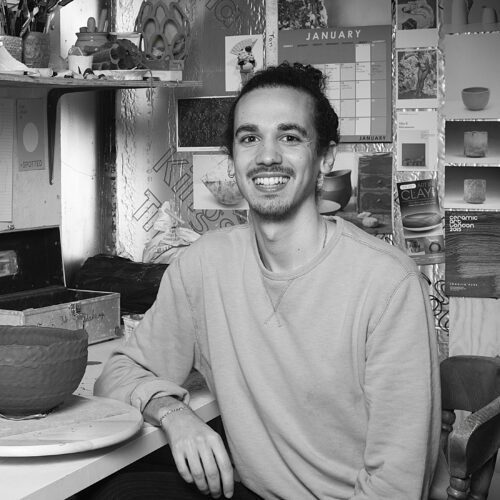
Toni’s work and ethos is centred around the idea of ceramics and its strong association with craft – as a material and its context within the fine art spectrum. He is interested in the history and connotations of porcelain and terracotta. The materials as symbols of trade, status, function, hierarchy; all are factors which correlate with the constant debate regarding crafts and its position within today’s society.