

Contemporary Ceramics gallery and shop exhibits the greatest collectable names in British ceramics along with the most up and coming artists of today. Our distinguished makers are all carefully selected members of the Craft Potters Association.
All of our makers are members of the Craft Potters Association and each of them have a story to tell.
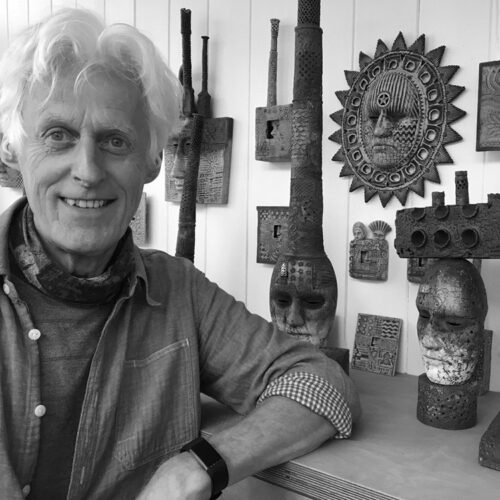
Alasdair Neil's ideas focus on the strange beauty found in the decaying architecture of industrial wastelands. He has built up a large collection of clay and plaster moulds that he has made from the surfaces of found fragments of discarded waste. It is these textures, patterns, shapes and colours that form the thread that runs throughout his entire range of unique hand built forms

Informing and framing his ceramic practice are a range of sources including the processes of walking the coast, swimming along its shore, gathering objects, materials and studying its intertidal ecology and geology. Images, motifs and gestural marks brushed or drawn into the surface of both his functional pots and the sculptural vessels can be seen as direct traces of his phenomenological experience.

With her figures Sally creates personalities that share a sense of warmth and calm. Drawing from early memories of family gatherings spilling across summer lawns; the quiet intimacy of a confidence shared between sisters; expressions of visual anecdotes carefully collected and stored to later emerge as a figure. The everyday moments of human interaction being elevated from the ordinary into something special.
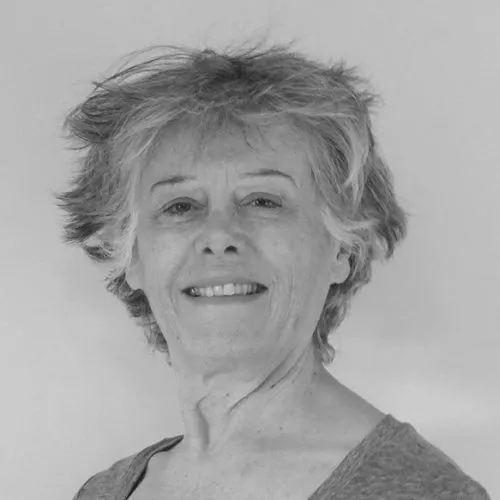
For this new exhibition, Jane will be showing a group of hemispherical double walled bowls mixed with different organic and man-made materials collected randomly, each a metaphor for memory and words. Using combinations of press moulding, coiling and slabbing processes before burnishing the surface, her pieces are then low fired and then refined with sandpaper followed by a higher temperature firing.

Duncan’s fascination with clay began as a child in his parents’ garden. The colour, smell and malleability of the earth led him to discover at school the transformation of clay by heat into a permanent object. As a teenager, Duncan was captivated by seeing his teacher throwing a pot on a kick-wheel, his bedroom posters were images of communist revolutionary heroes and 20th-century studio pottery.

John left art school in 1970 and dug trenches for gas pipes for a living. Later, through his college friend’s brother (who was a potter) John worked for David Frith in North Wales. He found the discipline hard, but it has stood him in good stead ever since.