


Contemporary Ceramics gallery and shop exhibits the greatest collectable names in British ceramics along with the most up and coming artists of today. Our distinguished makers are all carefully selected members of the Craft Potters Association.
All of our makers are members of the Craft Potters Association and each of them have a story to tell.
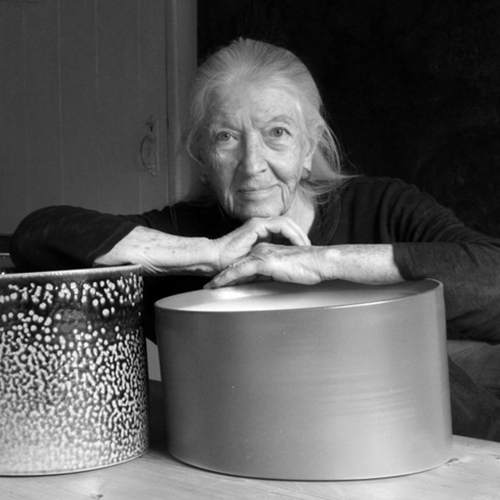
Jane Hamlyn's life as a full-time professional potter began in 1975. She chose to work in salt-glaze, an unpredictable technique with a short history and undiscovered potential.

After completing an MA in Ceramics from the RCA in 1988, Paul moved to Italy and worked for Gucci on their home and perfume products, then into the world of leather goods and accessories. That seemed a natural progression from clay with his love of form, sculpture and respect for craftsmanship. This led to a 30-year career in Fashion accessories, moving to New York in the early 90s, becoming design director for Calvin Klein, Cole Haan, and COACH amongst others.

David read philosophy and literature at Warwick University. Realising the lack of jobs as a philosopher, he became a potter and taught part-time in the ceramics department at Wolverhampton University for thirty years. This allowed him the space in which to continue with his personal practice. He was awarded a PhD from Manchester Metropolitan University in 2016. David used the inquiry within his thesis to examine the question of how he could employ the language of materiality, making, and firing (particularly raku) to critically focus on issues of personal identity.

James and Tilla Waters create their pieces from a studio in Mid-Wales. Carefully considering where hands hold pieces and edges meet mouths, their forms have classic clean lines with beautifully balanced proportions.

Matt Horne began his career in ceramics with training at Aylesford Pottery in Kent, where he developed his technical skills in production throwing, before going on to set up his own workshop near Folkestone in 2008.

Matthew’s work explores the links between ceramics and geology and place, making pieces entirely from geological samples that he has collected from specific locations around the country, and that illustrate the ceramic qualities inherent in these materials.