


Contemporary Ceramics gallery and shop exhibits the greatest collectable names in British ceramics along with the most up and coming artists of today. Our distinguished makers are all carefully selected members of the Craft Potters Association.
All of our makers are members of the Craft Potters Association and each of them have a story to tell.
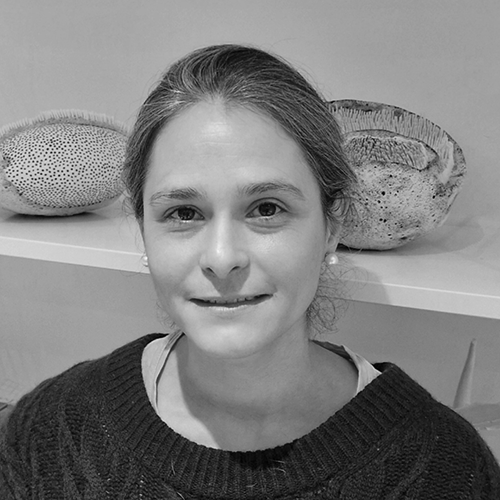
Josefina is a Colombian born ceramicist living and working in London. She gained a BFA in crafts from The University of the Arts, Philadelphia, under the guidance of world-renowned potter, James Makins.

Wendy discovered clay on an art foundation course. She went on to study at the University of Central Lancashire in 1998, gaining a BA in 3D Design (Ceramics). Since her graduation, she has continued to teach ceramics and run workshops for schools, colleges and community groups. She has participated in symposiums and workshops in Britain, Europe and America.

Penny Fowler is a London based potter whose work reflects 21st century living in the capital. Using porcelain and bone china clays, her work is characterised by clean, precise lines and forms using a strong palette.

Loretta began her practice in ceramics via a career in graphic arts, textile design and sculpture. During pregnancy, she found working on sculptural forms too heavy and moved across to ceramics. That was the start of her fascination with the medium as it allows her the freedom to explore her enduring passions of form, colour, texture and mark-making.

Kate studied 3D Design at the University of Brighton. After graduating, she participated in an international ceramic residency in Japan where she worked alongside established Japanese, Korean, and American artists. On her return, Kate set up her ceramic studio in London where she worked for nearly ten years. She now works from her garden studio in Kent making raku and stoneware pieces.

Maria's early creative training and work was in graphic design at a time when the industry was changing from drawing boards to computers. As her work became more computer based she realised she missed using her hands and making things, that realisation led to ceramics, initially experimenting in a shed in her garden, but later to an MA in ceramic design at Bath Spa University. Since graduating she has exhibited nationally and internationally and now works from her studio in Frome.