
In this conversation, Peter Beard discusses his practice in the context of his solo exhibition, The Long Practice of Change at Contemporary Ceramics. He reflects on his working methods, sources of inspiration, and the ideas that underpin his work. The exhibition runs from the Thursday 17th September – Saturday 10th October 2026.
Is there a typical working day?
Contemporary Ceramics: Describe your studio on a typical working day – what does it look, feel, even smell like to be in that space?
Peter Beard: My work place is cluttered. Most people who visit cannot see how I can work in it, but it is how it is. I start between 5 and 6 am each morning, 5 days a week. I work until about 5 pm then do some admin (my most hated job). It is very cold in the winter unless I am firing as there is no heating.
Image: Peter Beard / Ceramic Review

Contemporary Ceramics: Was there a moment – early on or later in life – when clay stopped being a material and started feeling like a language?
Peter Beard: I have never looked at clay as a material or a language – it is clay and it enables me to express myself. There are great technical challenges but generally it is a friendly stuff.
Image: Michele Williams
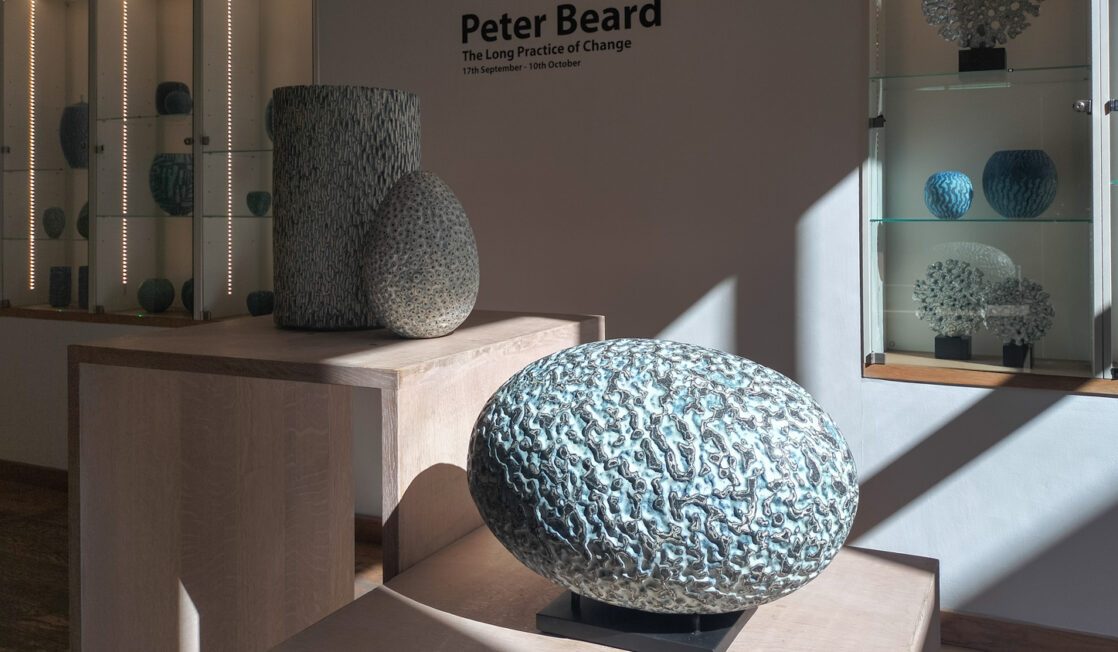

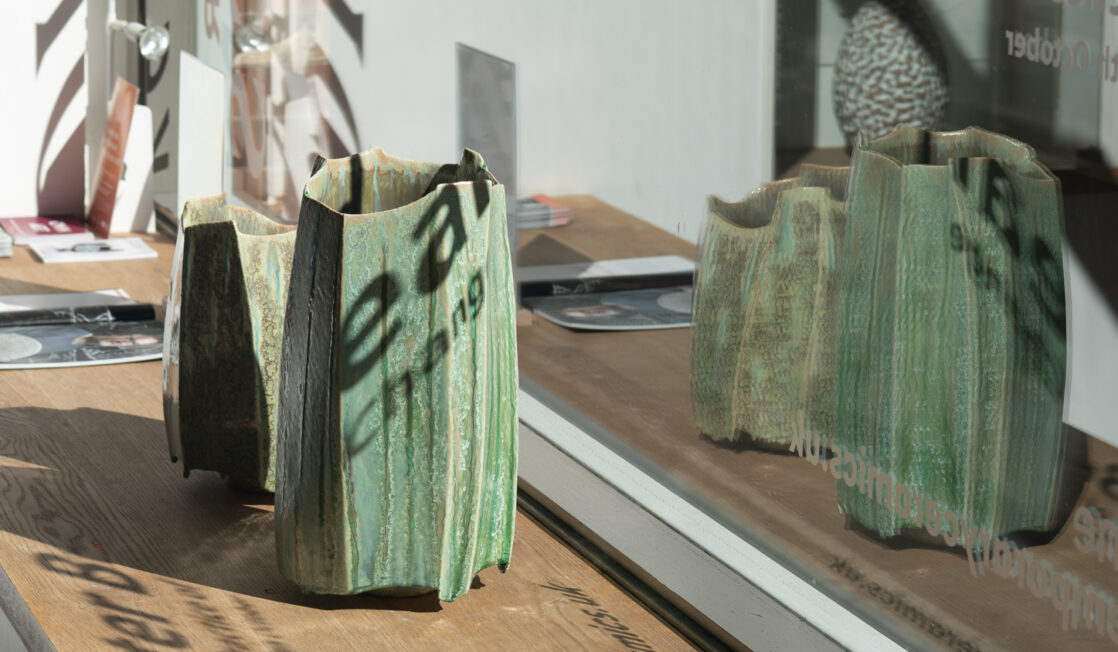
Contemporary Ceramics: What was the first piece of art that truly stopped you in your tracks? Do you think it still lives somewhere in your work?
Peter Beard: The only thing that has ever had a profound effect on me was, by chance, seeing a spectacular display of the northern lights up near the Hudson Bay in Canada when I spent 6 months hitchhiking around America and Canada in the ’70s. Otherwise I find things beautiful, and some times they give me a ‘tingle’ – usually ancient metal objects – particularly coins.
I am sure things reside secretly in my work. I can describe to someone where a piece of work has come from as they are a distillation of many visual things and experiences
Contemporary Ceramics: Your two residencies in China – working with porcelain at high temperatures, led to a significant new body of work. Can you tell us about those experiences – what drew you to go, what you found when you got there, and what came back with you?
Peter Beard: I went to China in 1982 with a CPA trip organised by Eileen Lewenstein. I had no money but an aunt died and left me, to the pound, the exact cost of the trip. It took time but I thought I would not get such an opportunity again so went. Amazing trip.
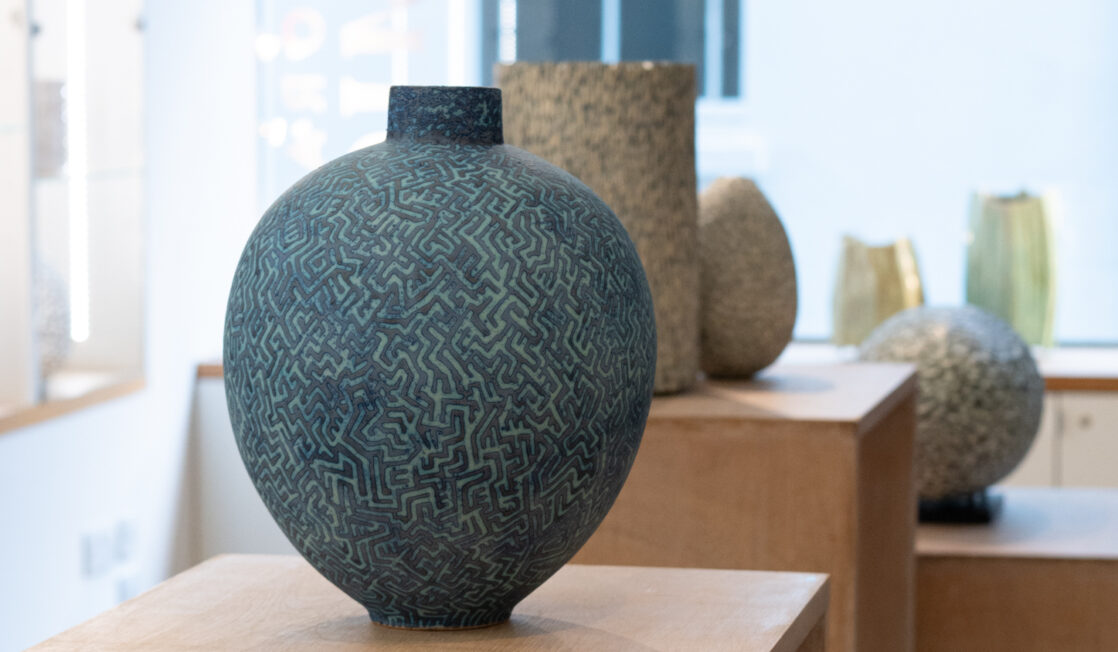
Since then I have watched China grow to the country it is today. With all its faults, it is a remarkable country, and it has an energy I have never experienced anywhere else.
I am a member of the International Academy of Ceramics and, at a conference in Taiwan, I met the artist Ryan Mitchell and he asked me if I would like to go to China as he ran the international residency program at Jingdezhen University. I jumped at the chance, and it is a remarkable vibrant place that cannot fail to energise anyone interested in ceramics. I was hooked. I always use residencies to experiment on work I planned to do but either never got the time or had to be fitted in with my daily practice. So I usually make work that is not of saleable quality but that teaches me a lot. So it was with this first residency.
Subsequent residencies in China have been making finished work of a quality I am very happy to exhibit and sell. I always come home energised. Except the time I fell and broke three ribs, and then I came back frustrated at not being able to complete my work and in pain and unable to work for 3 months.
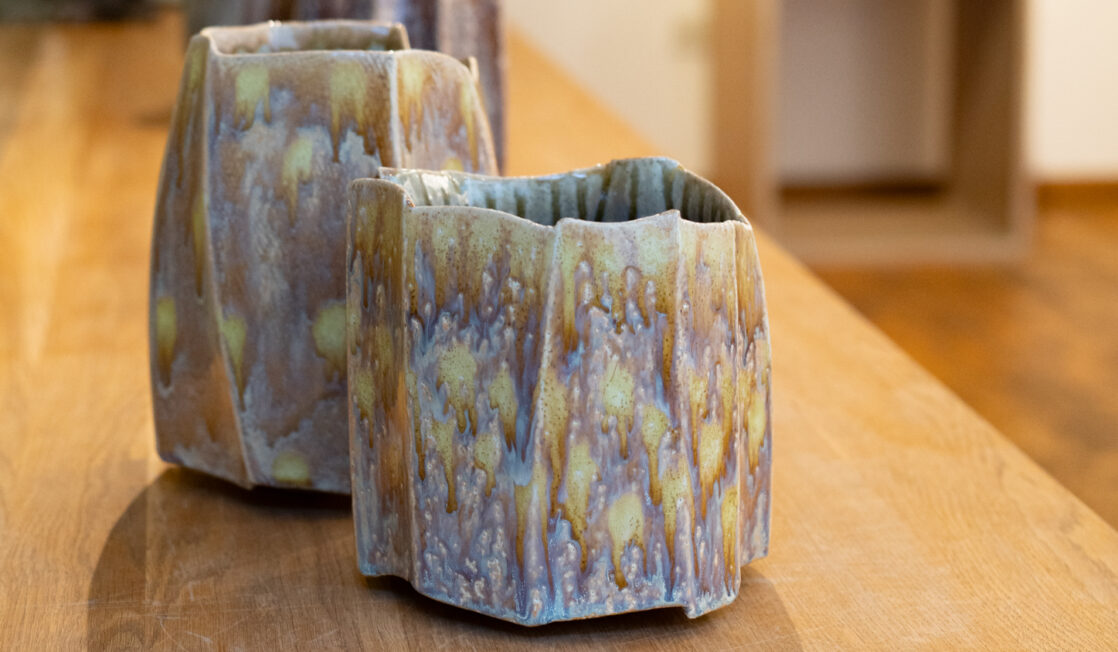
Contemporary Ceramics: The new work made in China has evolved alongside your existing practice. Looking at the exhibition as a whole, how do you see the two bodies of work in relation to each other – do they feel distinct, or has one begun to influence the other?
Peter Beard: The bodies of new work are a winding path but directly connect with all my other work. In some ways none is ‘new’ and none is ‘old’ – they are the exploration that I am continually doing. I get slightly worried by people who make very good work but it seems to stay in the same area for all careers.
There is so much to excite and stimulate that I cannot understand why a person’s work would not change often profoundly. I have many ideas but I know they will never see the light of day in clay as there is not enough time. It is all so much fun and exciting.
I am as excited about getting in the studio in the morning now as I was in 1973 when I first left college.
Contemporary Ceramics: The glazes that have emerged from your time in China are very beautiful – are these something you intend to develop further and carry forward into your practice, or do you see them as belonging to that particular moment and place?
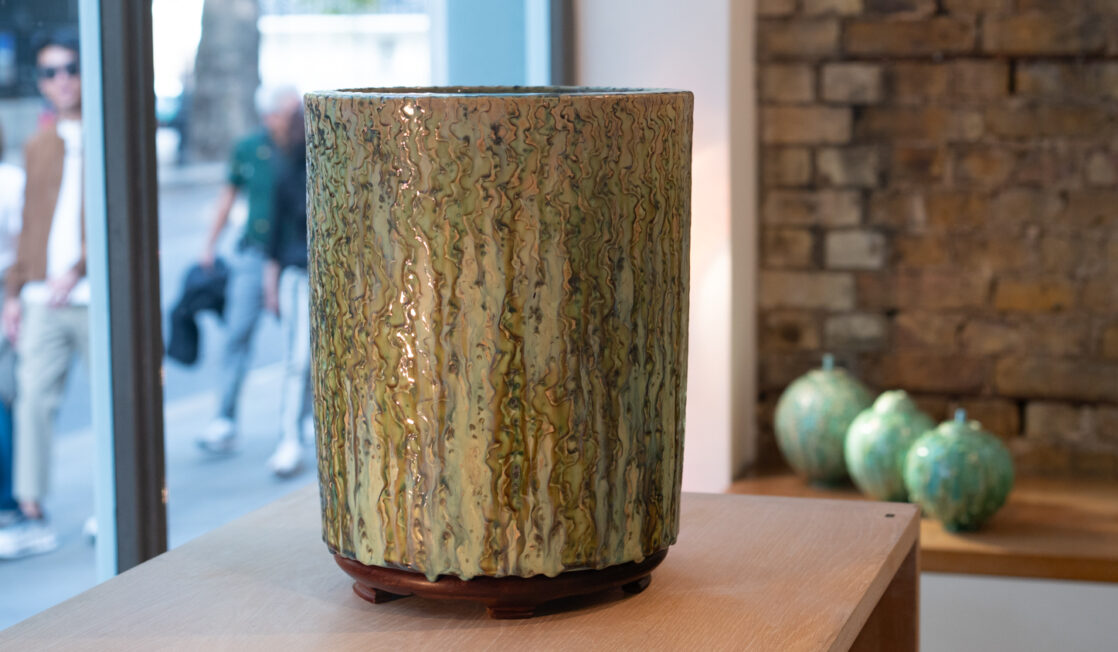
Peter Beard: The glazes are just the start. I have boxes and boxes of glaze tests and they evolve continuously and they will continue to grow as I do more. There are so many beautiful surfaces to find and one piece leads to another, to another, always forward.
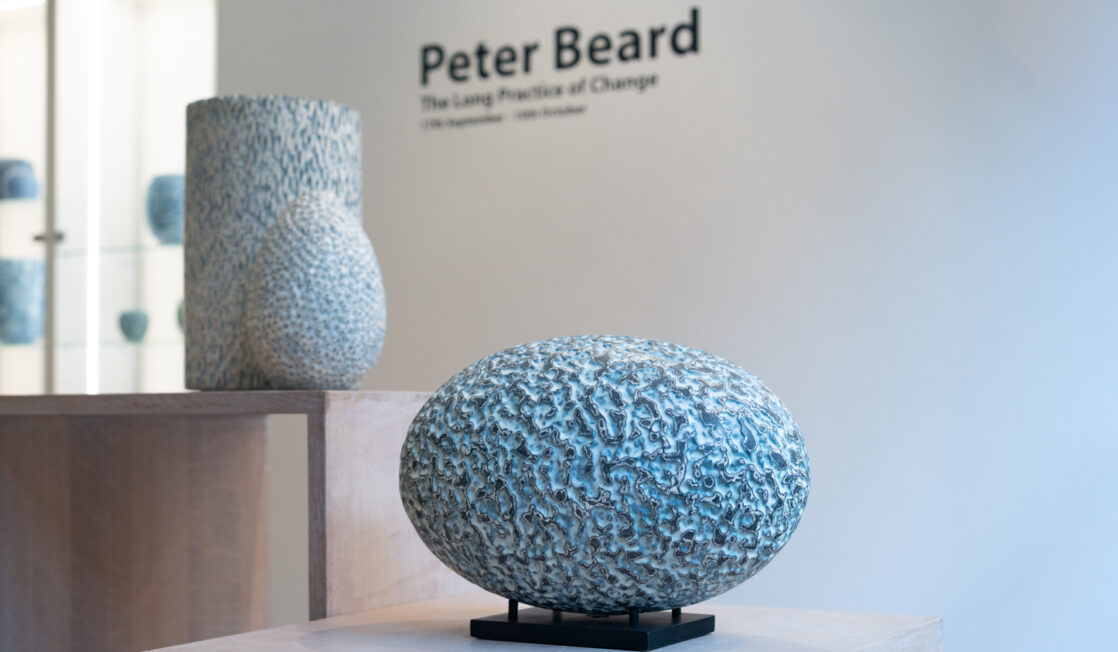
Contemporary Ceramics: The title ‘The Long Practice of Change’ feels like it holds the whole exhibition – the depth of a long career and the vitality of new directions. How did that idea take shape, and who named it?
Peter Beard: Well, I have been working professionally for over 50 years, so it is a long time and there have been many changes and maybe more to come. The work is definitely ongoing and as someone said “My best work is the work I have yet to make” and there is some truth in that, as one is and should be striving to be better, then better. My wife Hilary thought of the title. She is much brighter than me.
Contemporary Ceramics: Looking at the work in this exhibition, what has surprised you most about where the work has taken you?
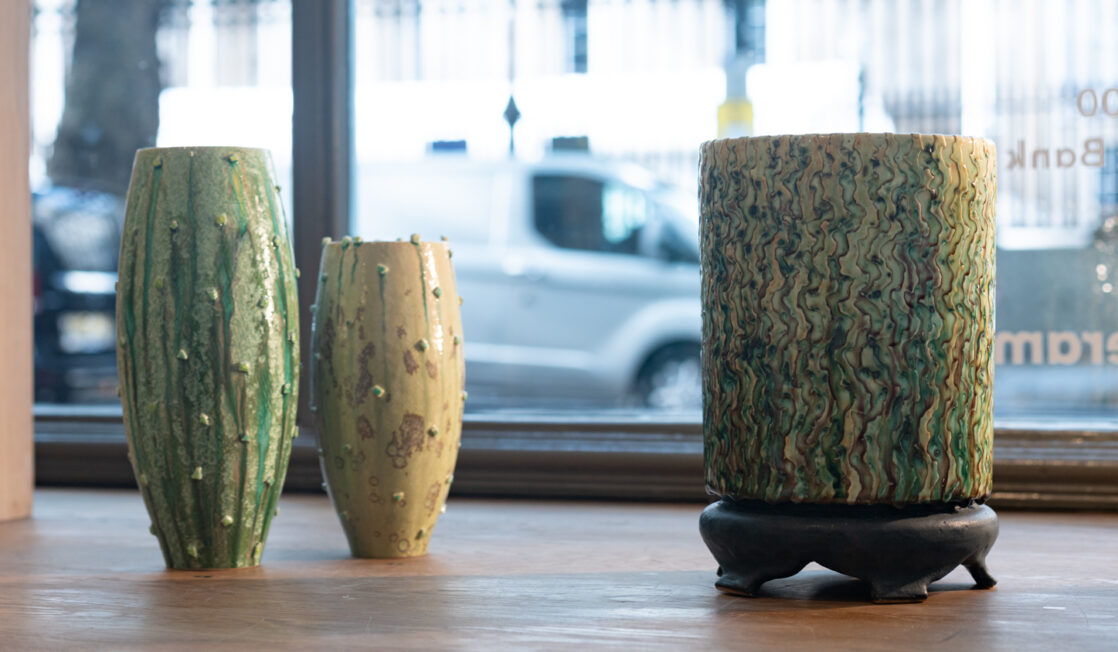
Peter Beard: Well having always worked with matt and semi matt glazes going ‘shiny’ was not what I was expecting but that is the joy of glazes they can take you anywhere and surprise and delight.
Contemporary Ceramics: And finally, what do you hope someone feels standing in front of one of your pieces – not thinks, but feels?
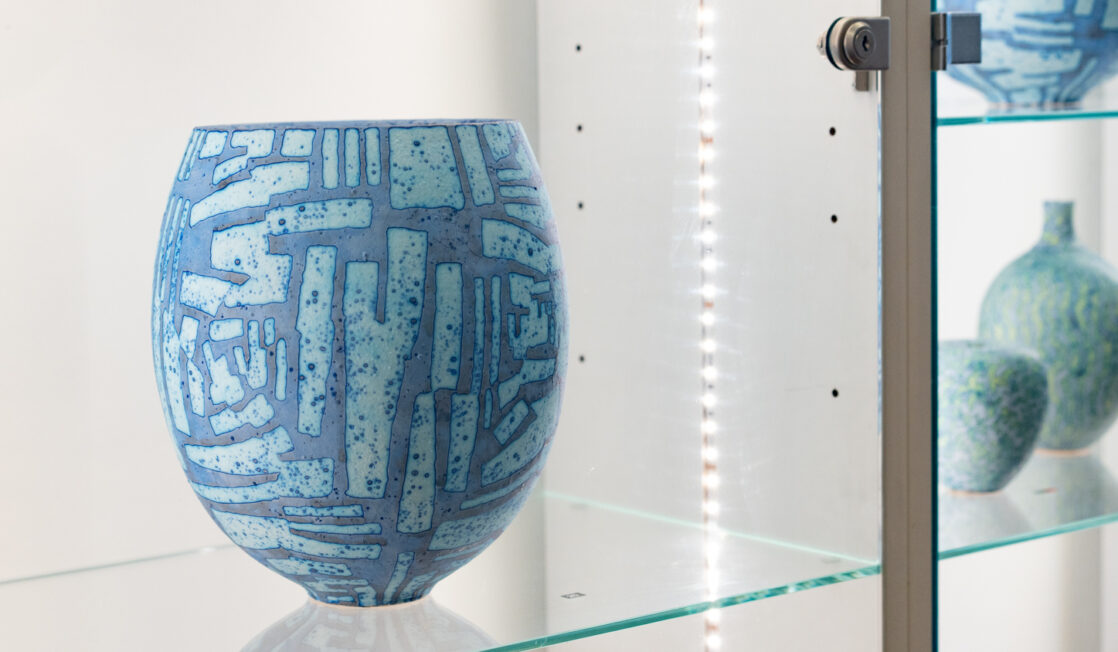
Peter Beard: A little tingle like a hug of warmth. And a desire to touch, they are very tactile.


