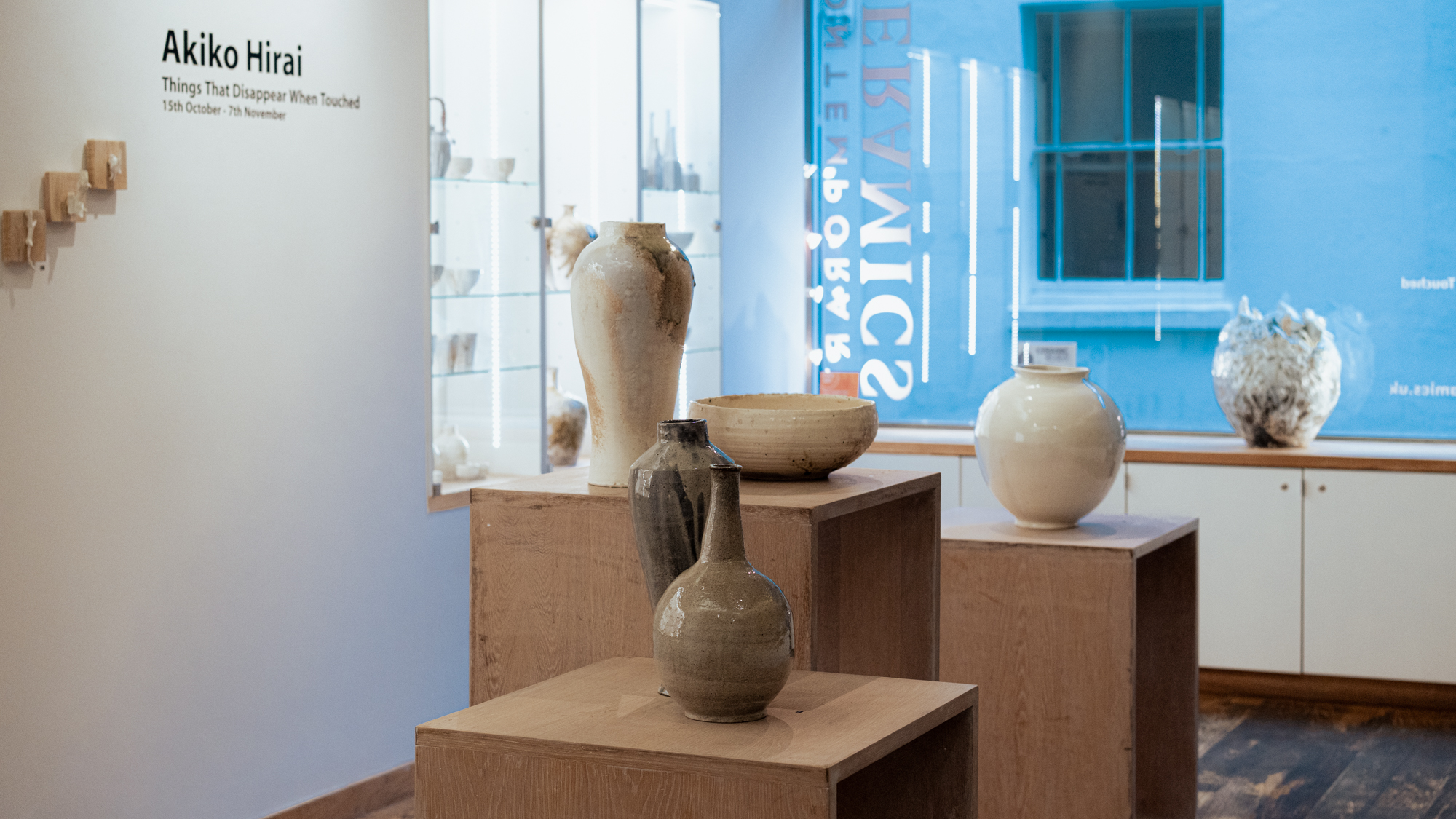
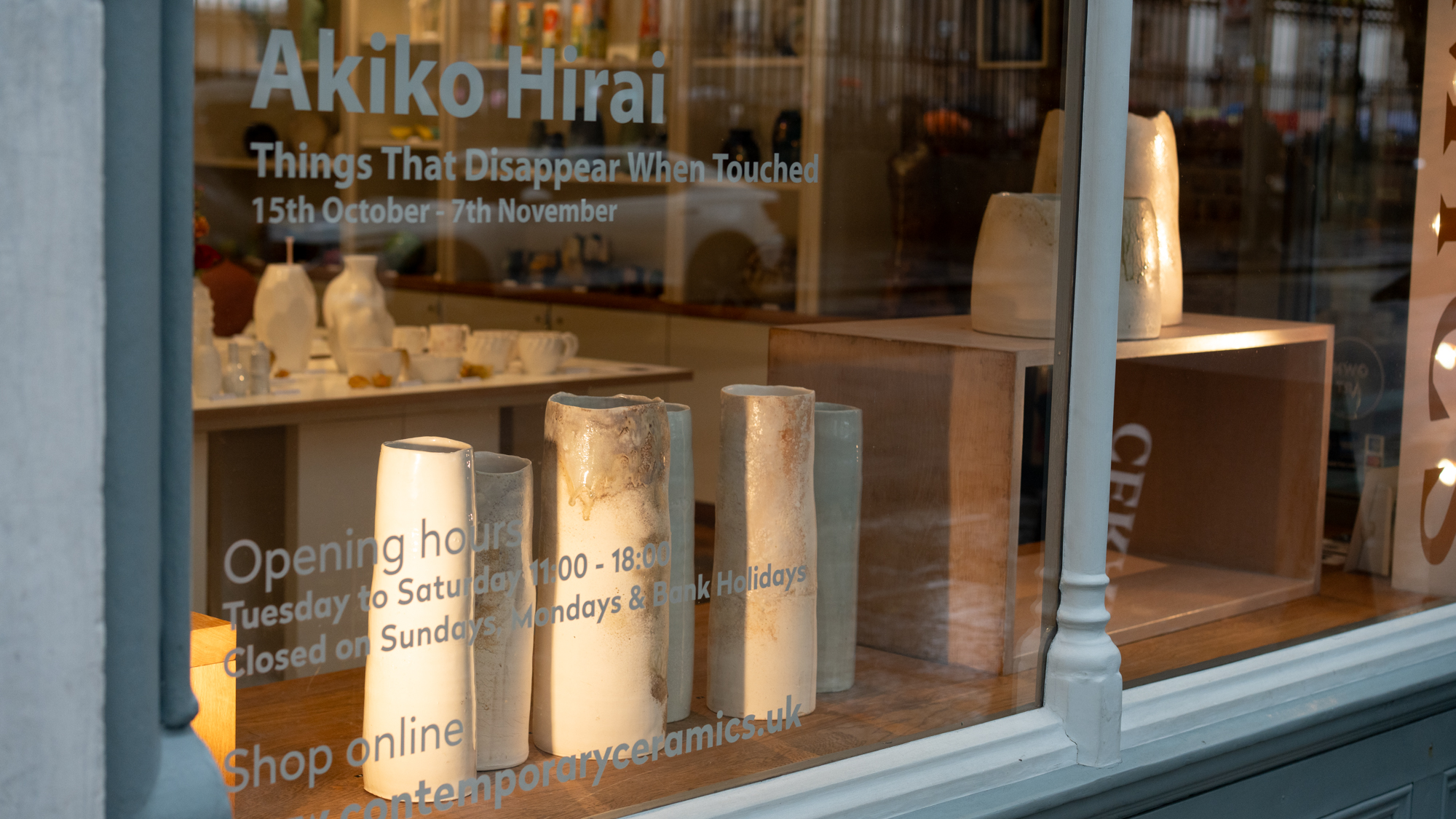
In this conversation, Akiko Hirai discusses her practice in the context of his solo exhibition, Things that Disappear when Touched at Contemporary Ceramics. She reflects on her working methods, sources of inspiration, and the ideas that underpin her work. The exhibition runs from the Thursday 15th October – Saturday 7th November 2026.
Is there a typical working day?
Contemporary Ceramics: Describe your studio on a typical working day – what does it look, feel, even smell like to be in that space?
Akiko Hirai: I usually plan my day before I get to the studio, depending on the project, which is most often preparation for an exhibition. I tend to walk to the studio, and ideas often come to me on the way. Once I’m there, the rest just flows; it becomes almost automatic. That’s why, if a visitor comes while I’m working, that unconscious flow gets pulled back into conscious thought. After they leave, I sometimes don’t know what to do next, and it can be hard to find my way back into my usual rhythm of work. Basically, I like to work alone.
The studio feels completely different on the days I’m making and on the day I open the kiln. It isn’t only the difference in temperature. On kiln-opening days there is a strange tension in the air, the feeling that something has just happened. It’s an odd way to put it, but it’s a little like the atmosphere after an accident.
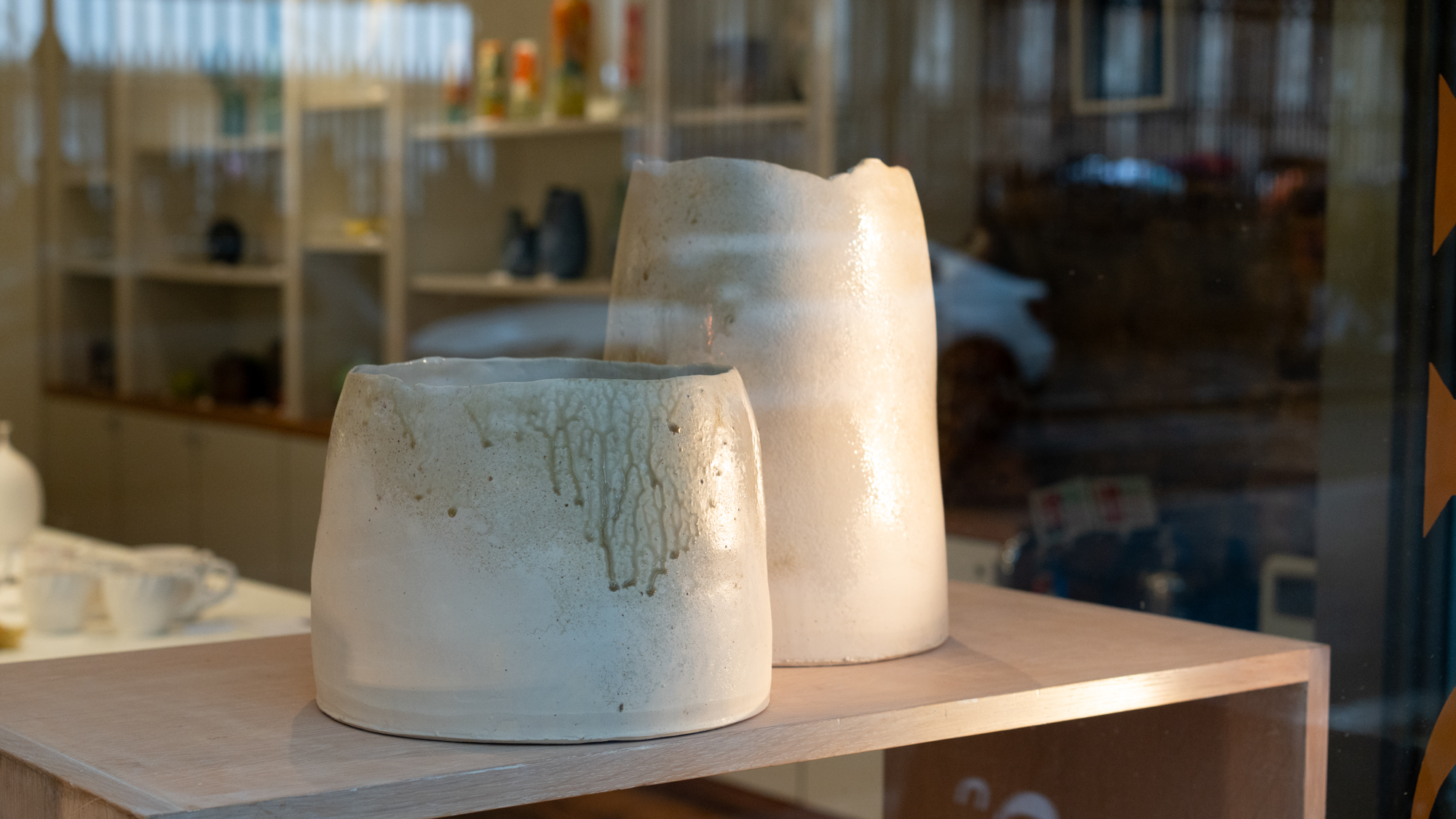
Contemporary Ceramics: Was there a moment – early on or later in life – when clay stopped being a material and started feeling like a language?
Akiko Hirai: Clay feels to me like a state before language, something like words that haven’t yet been organised into a system.
Contemporary Ceramics: What was the first piece of art that truly stopped you in your tracks? Do you think it still lives somewhere in your work?
Akiko Hirai: The Korean moon jar that once belonged to Lucie Rie, now in the British Museum, and the paintings of Giorgio Morandi. Beyond those, there are many others: antique pots, and small moments from everyday scenes. I think fragments of these influences live on in my work, together with my own interpretation of them.
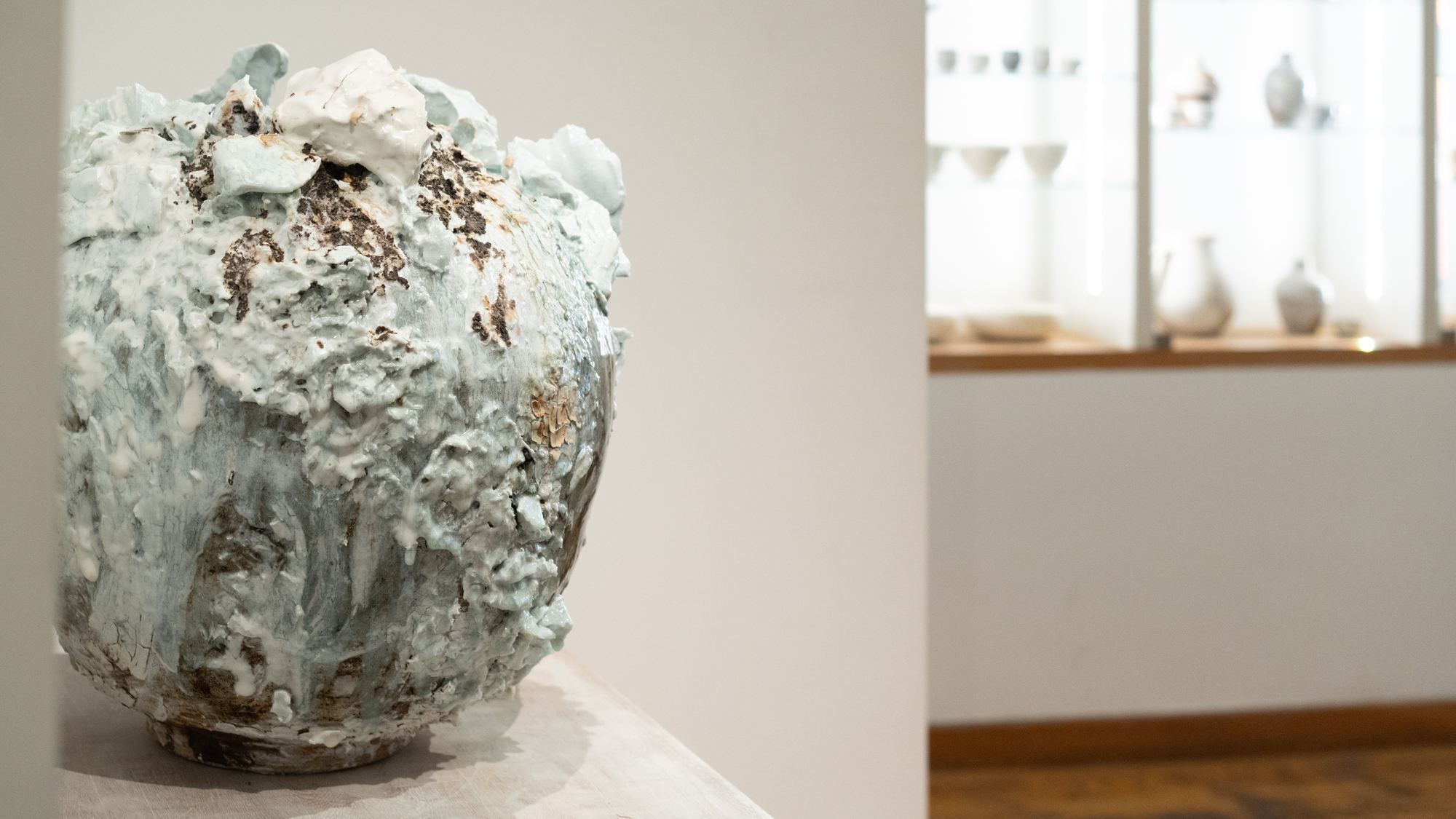
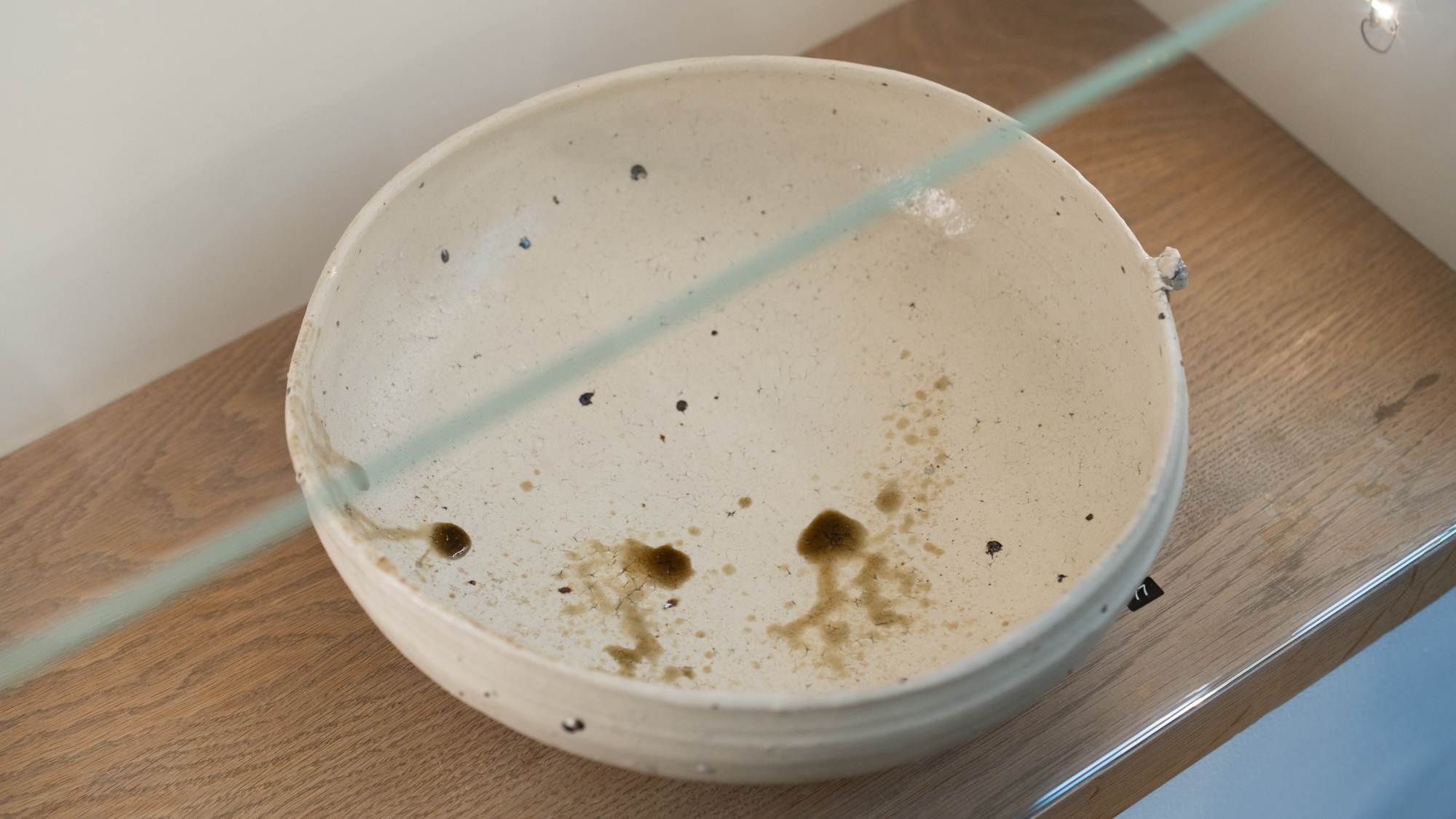
Contemporary Ceramics: Thinking of the title – ‘Things that Disappear when Touched’ – you moved from raku clay to a stoneware that can’t tolerate trapped air and needs far more careful preparation. Did the title arise with the idea of a piece that could be lost to the slightest touch, or did the idea arrive afterwards?
Akiko Hirai: I had been testing the clay for some time, and the title emerged gradually. It is connected to an earlier body of work of mine, though in a different context.
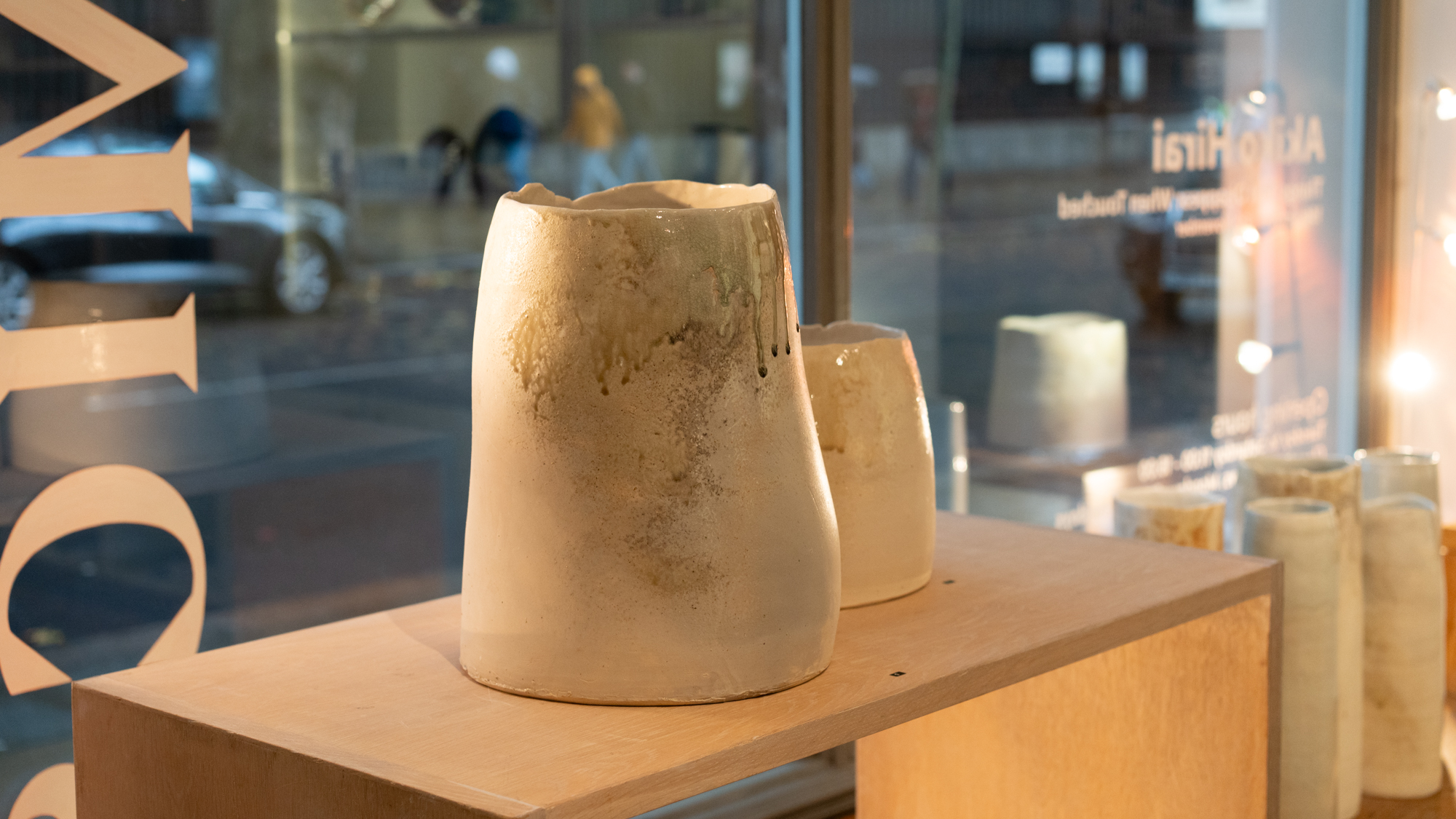
Contemporary Ceramics: You describe a single tall pot holding several centres, where, as you work on the top or bottom of the piece, the centre shifts. How do you decide when to follow that movement and when to correct it?
Akiko Hirai: I don’t correct it. As the pot grows taller, it tends to follow the small movements of my body. I call this yuragi. For me, yuragi is close to what John Dewey described as a living equilibrium: not a fixed balance, but one that is constantly lost and recovered. The day after my private view, I went to the launch of Pot Book, and the author recommended Dewey’s Art as Experience to me. What surprised me was finding a book that put into words something so close to what I had been thinking, and coming across it the day after my own exhibition opened.
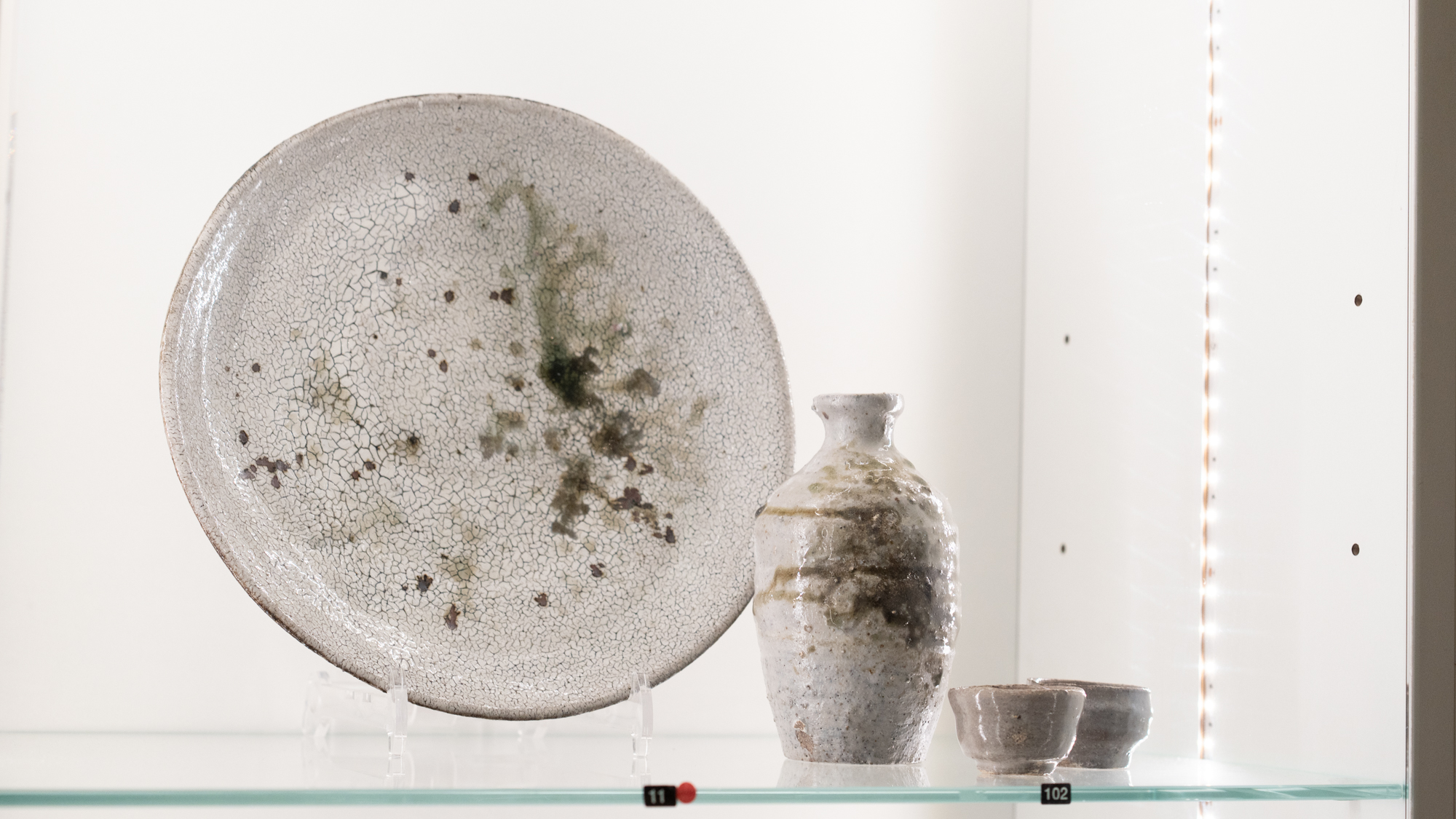
Contemporary Ceramics: Working with raw slip is very immediate and leaves no way back – many of your pieces were lost or refired again and again. How did you learn where the line was between a piece that works and one that doesn’t, that is simply bad?
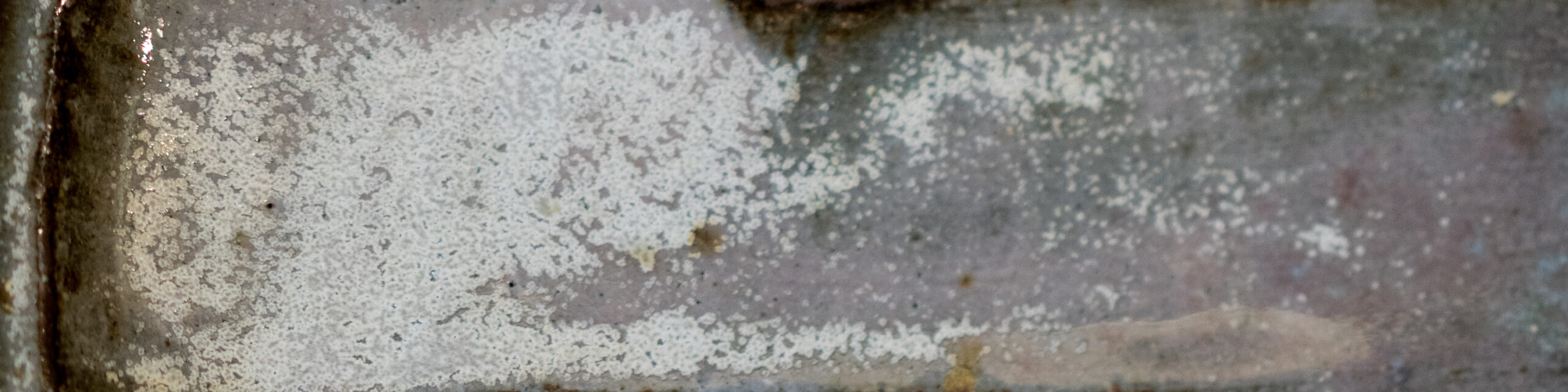
Akiko Hirai: The marks left by the slip may look random, but they aren’t entirely random. Where the slip is thin, a fine crackle appears, or none at all; where it is thick, the crackle is much larger. With both partial and full dipping, repeating the process teaches you how to reach a balance, and over time I’ve learned to apply the slip in a way that feels balanced, at least to my eye. It comes back to that idea of equilibrium.
Contemporary Ceramics: The title ‘Things that Disappear when Touched’ refers to a physical interaction with things, is there also a sense of the visual – of things that disappear when looked at?
Akiko Hirai: Sometimes, yes. It has to do with the relationship between perception and attention. It’s like Rubin’s vase, the image that can be seen as a vase or as two faces: when you see one, the other disappears.
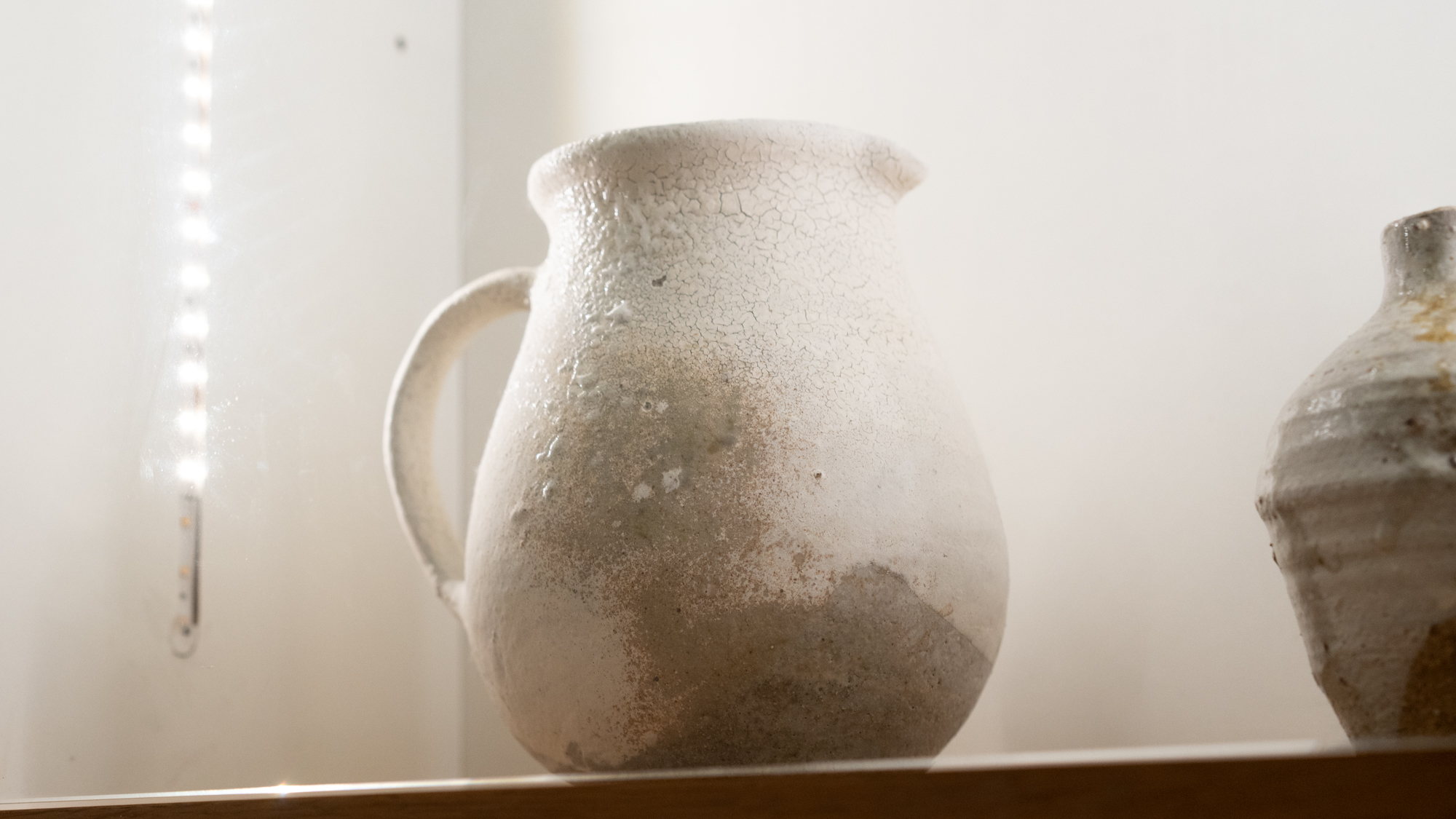
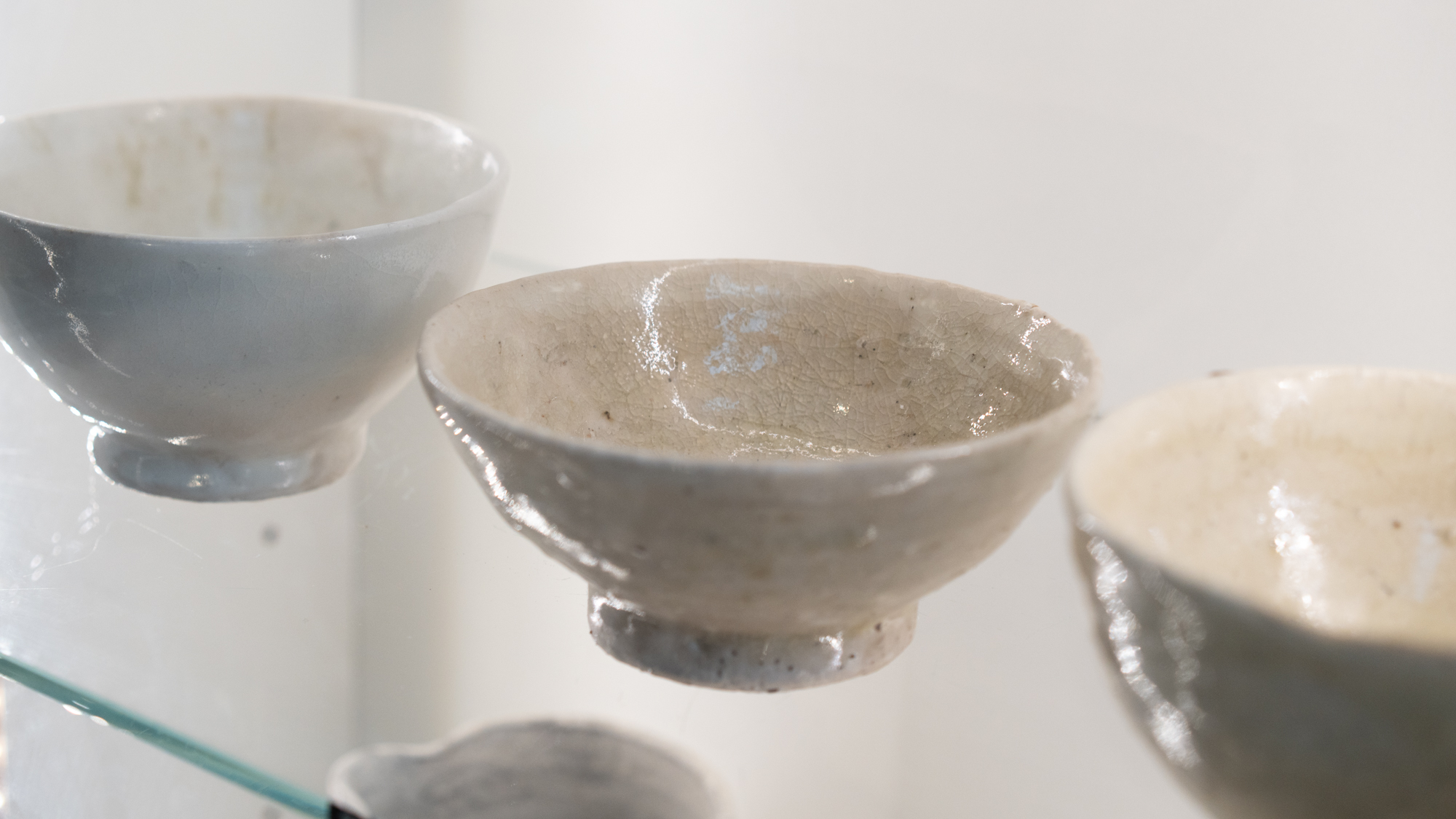
Contemporary Ceramics: Looking at the work in this exhibition, what has surprised you most about where the work has taken you?
Akiko Hirai: When you work on the same thing for a long time, there are moments when you look at something and feel nothing. Then a small stimulus, something unexpected that comes out of the kiln, becomes a trigger, and I start thinking about how to reproduce it. That becomes the starting point for the next piece. So my work isn’t planned from the beginning. It develops through what I learn from each experience along the way, and in that process there is no final, finished point.
Contemporary Ceramics: And finally, what do you hope someone feels standing in front of one of your pieces – not thinks, but feels?
Akiko Hirai: I think yuragi is something you feel rather than think about. If that sense of yuragi reaches the person looking at it, then I think the piece has succeeded.